
Last updated October 15, 2026
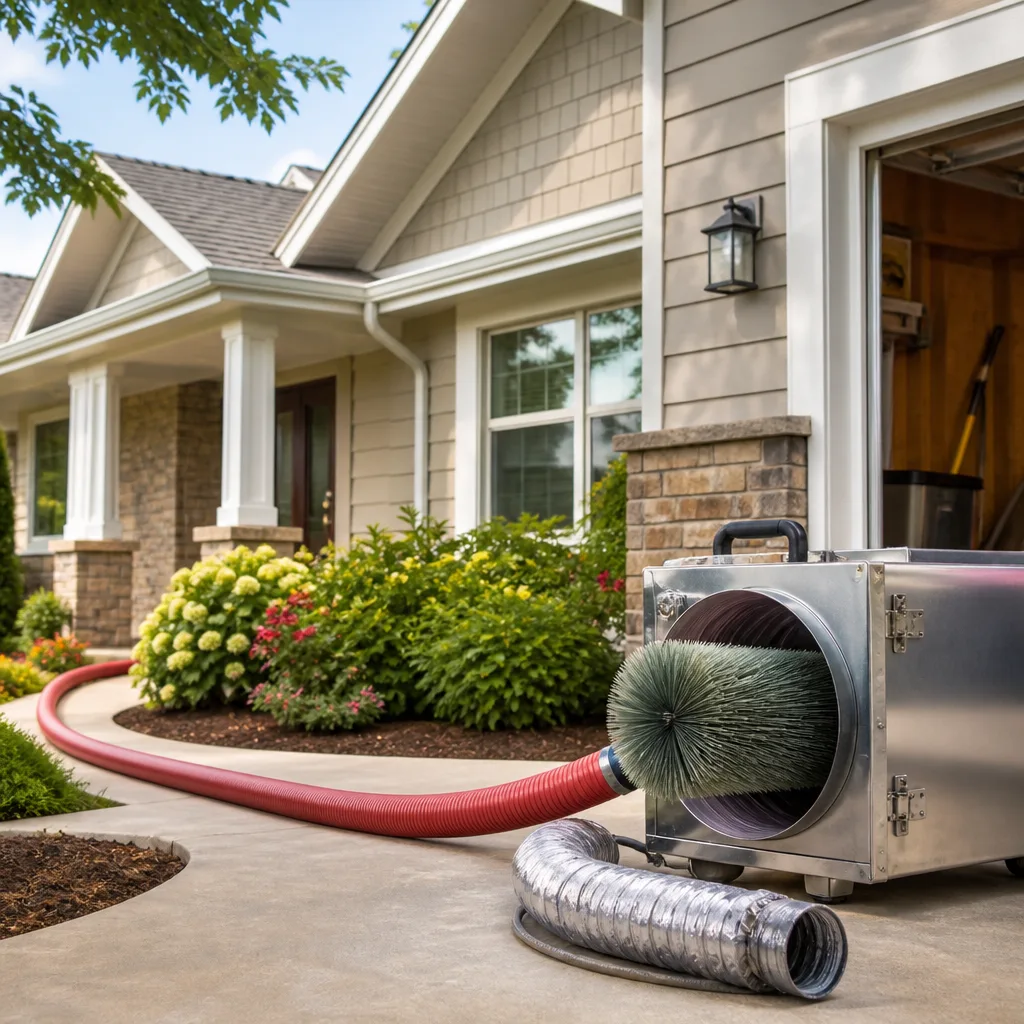 Whole-home duct cleaning
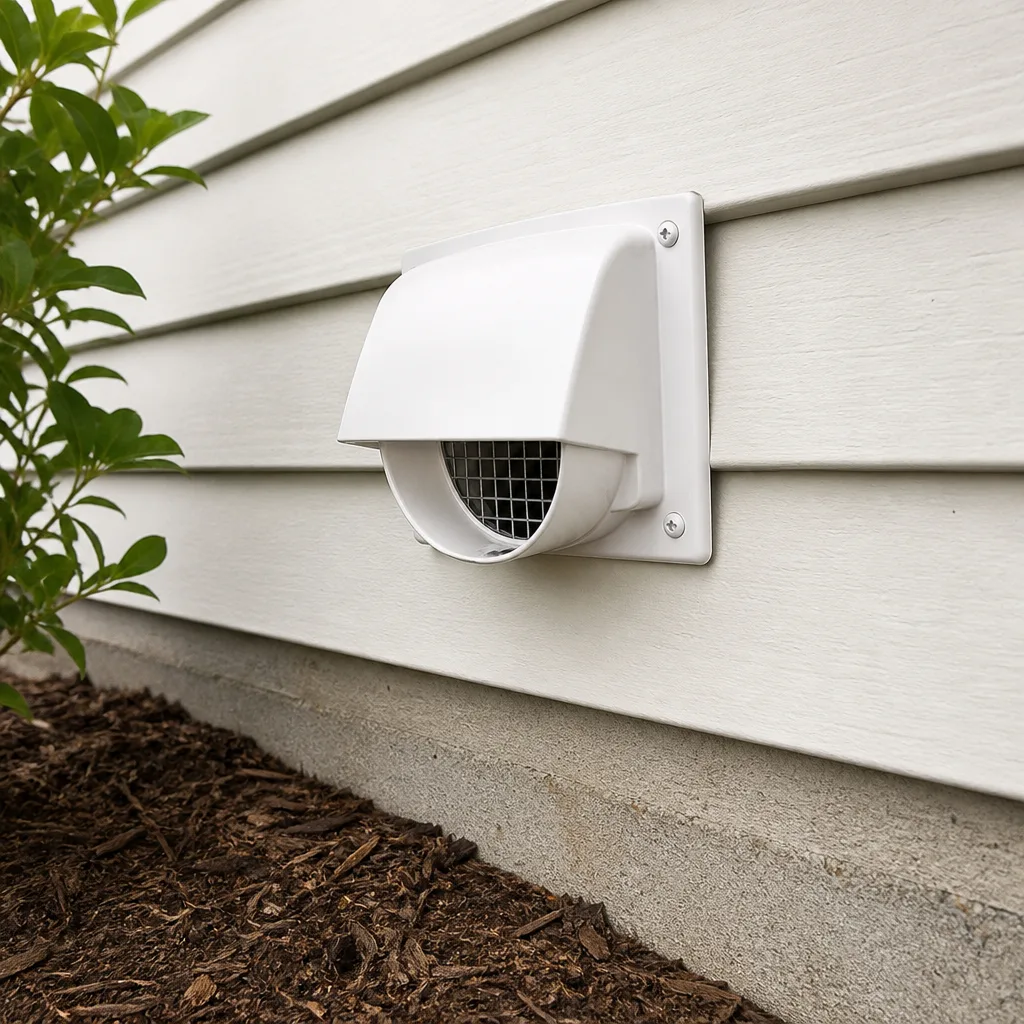 Dryer vent cleaning
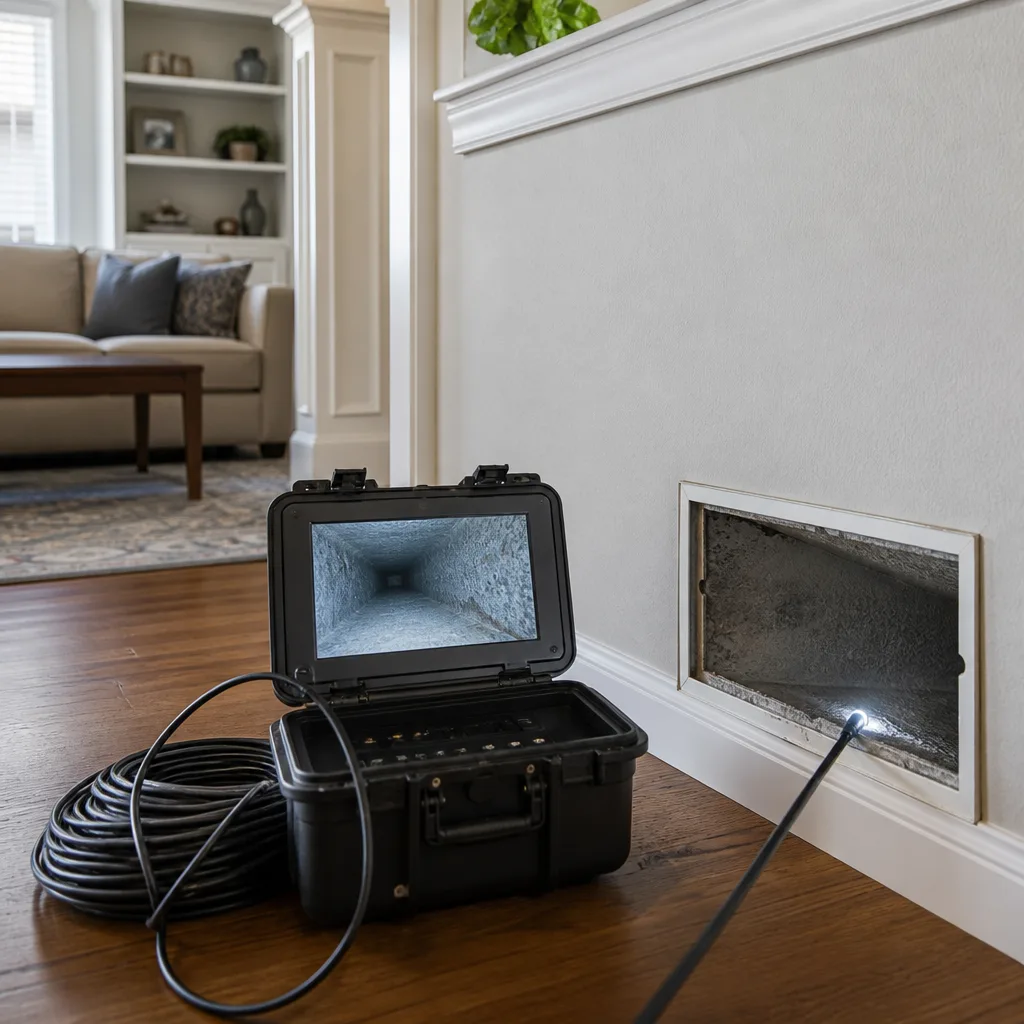 Camera inspection
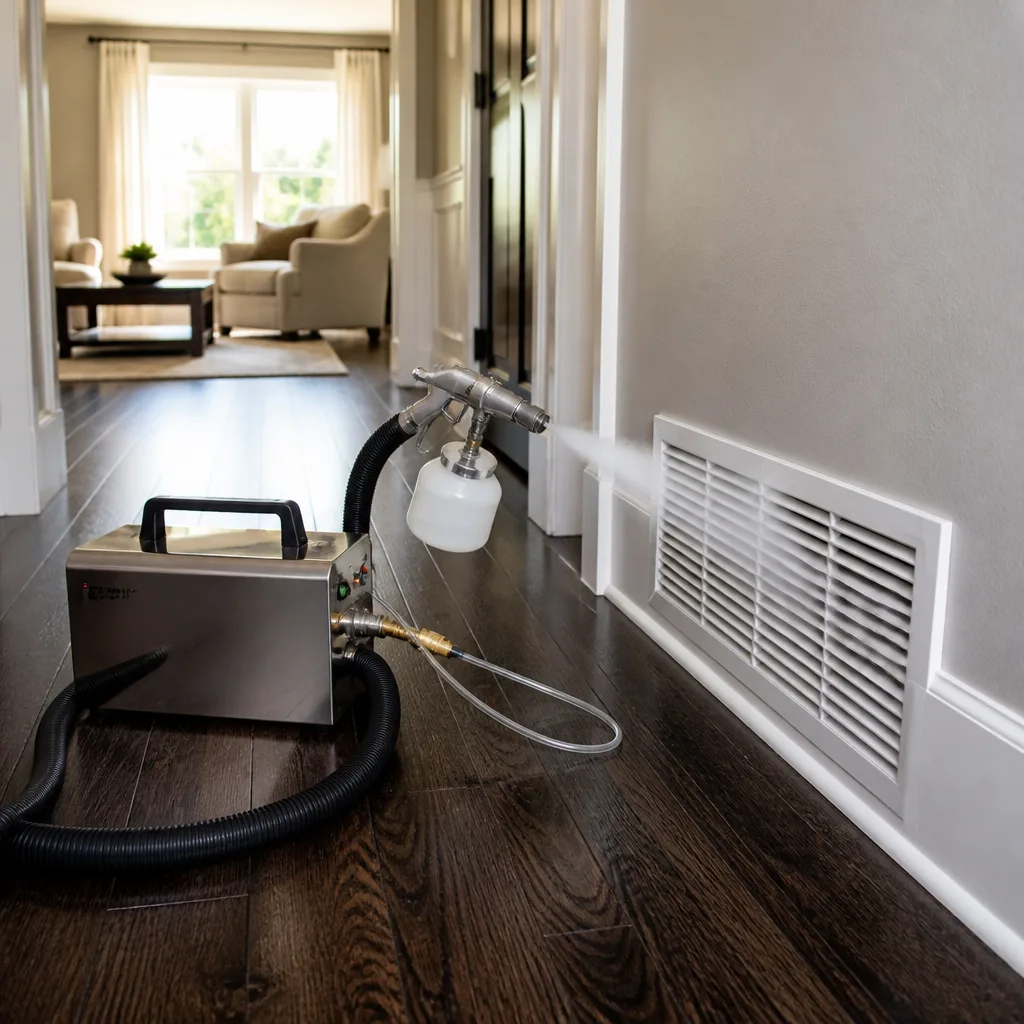 Sanitizing & deodorizing
Whole-system duct and dryer vent check with before-and-after photos - you see exactly what came out of your vents
That "$99 whole-house special" is a bait ad - the real number appears once they are in your hallway, or the "clean" is a shop-vac at the register. We photograph the inside of your ducts before and after instead.
How to Hire a Air Duct Cleaning Contractor in San Francisco: A Step-by-Step Guide
San Francisco has one of the highest concentrations of air duct cleaning scam complaints in California, and most of them begin the same way: a $49 coupon that turns into a $900 invoice once the technician is in your home. Our city’s older housing stock, with its narrow crawl spaces, retrofit ducts, and decades of accumulated debris, makes honest pricing and verifiable credentials matter more here than almost anywhere else. This guide walks you through how to screen Air Duct Cleaning services contractors before they ever set foot in your home, so you never find yourself in that position.
Quick Answer
Hiring an air duct cleaning contractor in San Francisco starts with verifying their California license and checking complaint history, then asking three disqualifying questions about pricing structure, technician identity, and written guarantees before scheduling. A legitimate contractor will provide a written whole-system price before work begins, prove who is coming to your door by name and photo, and back the work with a written guarantee, typically 365 days. Anyone who prices per vent, refuses to identify their technician in advance, or won’t put the guarantee in writing should be disqualified immediately.
Styles & brands we work with
Table of Contents
- Why San Francisco Is Different: Climate, Housing, and the Local Scam Playbook
- Step 1: Verify the California License Beyond the Active Number
- Step 2: Ask the Three Questions That Immediately Disqualify Bad Contractors
- Step 3: How to Read a Written Estimate Like an Insomniac Prosecutor
- Step 4: What Real Technician Identity Verification Looks Like (and Why It Matters)
- Step 5: The Written Guarantee Language That Separates Accountable Contractors From Ghosts
- Step 6: The Day of the Job – What Should Happen at Your Door
- Step 7: After the Job – Documentation That Proves the Work Was Done
Why San Francisco Is Different: Climate, Housing, and the Local Scam Playbook
San Francisco’s microclimates do not just change from neighborhood to neighborhood; they change from block to block. A home in the Sunset District deals with salt air and persistent fog that keeps ducts damp for months at a time. A home in the Mission sits in a warmer, drier pocket where fine particulate settles and bakes into duct lining. A home in Pacific Heights or Presidio Heights, often built before 1940, may have ducts that have never been properly cleaned because the original systems were retrofitted rather than designed; for guidance on maintaining these systems throughout the year, see our Seasonal Air Duct Cleaning Care for San Francisco: Year-Round Homeowner’s Guide. None of this is generic, and none of it shows up in a national duct cleaning franchise’s training manual.
This is precisely why the scam playbook works so well here. The bait-and-switch operators know two things about San Francisco homeowners: many live in older homes with genuinely dusty systems, and many are first-time homeowners who just spent an uncomfortable amount of money on a house and are now worried about every system inside it. A $49 whole-house coupon sounds like a smart way to check one box. What it actually does is put a technician in your living room with every incentive to find a problem expensive enough to make the trip worth his time.
Since 2004, our team at Linden Air Duct San Francisco home has walked through the aftermath of these jobs in neighborhoods from Noe Valley to the Outer Richmond. We have cleaned systems that were supposedly cleaned 11 months earlier and found the same layer of construction debris that predated the previous owner. We have seen receipts where the final invoice was six times the advertised price. The pattern is so consistent it is almost boring: a low per-vent price quoted on the phone, a technician who arrives alone, no written guarantee, no before-and-after photos, and a door that closes with the homeowner holding an invoice they never agreed to.
The good news is that screening these operators out before they ring your doorbell is not complicated. It requires about 20 minutes of phone time and a willingness to ask questions that legitimate contractors answer without hesitation because the questions themselves are the easy ones.
Step 1: Verify the California License Beyond the Active Number
Every air duct cleaning contractor operating in San Francisco is required to hold a contractor’s license issued by the California Contractors State License Board, or CSLB. Checking that a license number is active is the bare minimum, the equivalent of confirming a driver has a license but not checking for DUIs. You need to look deeper.
Here is what to verify, in order of importance:
- The class. Duct cleaning falls under the C20 classification: Warm-Air Heating, Ventilating and Air-Conditioning. If a contractor’s license class is not C20 or does not include C20 in a combination, that is a red flag. A general building contractor can legally do many things, but duct cleaning is not one of them without the C20 endorsement. We hear this question often because people naturally assume any licensed contractor can clean ducts. That assumption is exactly what the bad operators count on.
- The bond amount. The CSLB requires a $25,000 contractor’s bond in California. That is the minimum, and nearly every low-ball operator carries exactly the minimum. A higher bond amount, $50,000 or more, signals a company that has chosen to put more financial skin in the game. It is not a guarantee of quality, but it is a signal of intent. Companies that plan to disappear do not double their bond exposure voluntarily.
- Complaint history. The CSLB maintains a public complaint database. Look for two things: the number of complaints and whether they were resolved. A single complaint from ten years ago that was resolved in the homeowner’s favor is not a red flag; every contractor eventually has a dispute. Three complaints in the last two years, especially if any were referred to arbitration, is a pattern. Do not skip this step. It takes four minutes.
- The legal business name on the license. Make sure it matches the name on the company’s website, marketing materials, and estimate. Bait-and-switch operators frequently operate under multiple DBAs, and the name on the truck may not match the name on the license. If the names do not match, ask why before scheduling. You will not get a good answer because there is not one.
Our advice: run this check before you even call for pricing. It filters out 90% of the problem operators in San Francisco without a single phone conversation.
Step 2: Ask the Three Questions That Immediately Disqualify Bad Contractors
Once the license checks out, call and ask three specific questions. The order matters, because each question builds on the previous one. You are not trying to catch someone in a lie; you are trying to see whether their business model can survive honest answers.
Question 1: “How do you price the job?”
Listen for how the answer begins. If it begins with “per vent” or “per register,” the conversation is probably over. Per-vent pricing is the mechanism by which a $99 quote becomes a $900 invoice. The operator quotes a low per-vent price, knowing that a San Francisco home might have 10, 15, or even 20 vents depending on the era of construction, and that the technician will “discover” additional vents, additional returns, and additional complications once he is in the attic. A legitimate contractor quotes a whole-system price based on the size of the home and the configuration of the system, and puts that number in writing before any work begins; for a detailed look at what drives these costs locally, read our Air Duct Cleaning Cost Breakdown: The San Francisco Homeowner’s Reference for 2026. If the contractor cannot or will not give a flat, whole-system price on the phone, thank them for their time and hang up.
This is where our written-price standard comes from. Every job we do in San Francisco, whether it is Air Duct Cleaning in San Francisco or a repair, receives a written price before work begins. No exceptions, no verbal reassurances, no “we’ll see what we find.” The number on the page is the number on the invoice.
Question 2: “Who exactly will be at my door?”
This is the question that exposes the largest gap in the industry. Most companies will say “a certified technician” or “one of our trained professionals.” Those words mean nothing. A certified technician can be anyone the company chooses to call one. What you want to hear is: “His name is [name], and we’ll send you his photo before the visit so you know exactly who to expect.”
San Francisco has a documented problem with unvetted subcontractors being dispatched to homes, sometimes the same week they were hired. We have had customers tell us they did not get a name at all, just a call saying “the tech is on his way.” You do not have to accept that. The Threshold Standard, which we have operated under since 2004, requires that every technician be background-checked, identity-verified, and introduced to the homeowner by name and photo before the visit. At the door, the technician shows a photo ID badge that matches the photo you already received. Anyone who can’t or won’t do this has a reason, and that reason is never in your favor.
Question 3: “What does your guarantee say, exactly, and who enforces it?”
A company that has never been asked this question will hem and haw. You will hear phrases like “we stand behind our work” or “we come back if there’s a problem.” Those are not guarantees; those are sentiments. A guarantee is a written document that states what is covered, for how long, and what happens if the work is not right. We put ours in writing on every job: 365 days. If the work is not right, we make it right. For Air Duct Repair in San Francisco, we also include a free second visit if a covered repair does not hold. No arbitration clauses, no fine-print escape hatches, no “we’ll see what the manager says.” Just a written commitment with our name on it, and the name of the owner, Marcus Veale, who is the person responsible for fulfilling it.
These three questions are the entire screening process. License check, pricing structure, technician identity, written guarantee. That is it. If a contractor passes all three, they are almost certainly legitimate. If they fail one, move on. There are honest operators here; you just have to ask the questions that separate them from the noise. For more guides & resources on protecting your home investment, visit our blog.
Step 3: How to Read a Written Estimate Like an Insomniac Prosecutor
Once you have a written estimate in hand, do not just look at the bottom line. Read it the way a lawyer would read a contract, because that is what it is. Here is what to look for, line by line.
Look for the phrase “per vent” anywhere. If it appears, even as a note or a contingency, the estimate is not actually a fixed price. “Additional vents billed at $35 each if discovered” is a blank check with your signature at the bottom. A fixed whole-system price has no per-unit components. It says something like “Complete air duct cleaning, 1,800 square foot single-family home, all accessible supply and return ducts: $[fixed price].”
Look for what is not listed. A legitimate estimate explains what is included and what is not. It says whether the price covers the main trunk line, the branch ducts, the return air system, and the registers. It says whether the dryer vent is included or billed separately. It says whether any access panels or repairs are extra. An estimate that is just three lines and a number is not a deal; it is a placeholder that will be renegotiated in your hallway.
Look for scope-of-work language that protects both parties. A good estimate says what the technician will do if they find something unexpected, like a collapsed duct, a disconnected run, or evidence of mold. It says whether the technician is authorized to proceed with additional work and at what cost threshold. Ours says, in plain language, that no additional work begins without a written change order signed by the homeowner first. That is not because we expect to find problems; it is because you deserve to know the cost before the work, not after.
Look for the guarantee language in the estimate itself. If the estimate does not mention a guarantee, ask where the guarantee lives. If it lives nowhere in writing, it does not exist. Our estimates reference the 365-Day Done Right Promise by name, because the promise is not a marketing slogan; it is part of the scope of work. If the work is not done right within 365 days of completion, we come back at no charge. That sentence is on every estimate we write in San Francisco.
Look for equipment and supplies specifications. A legitimate estimate tells you what kind of equipment will be used, because equipment quality is the difference between a system that is actually cleaned and a system that was visibly vacuumed. We operate professional-grade negative-pressure extraction equipment from Rotobrush and Nikro, which means the dust is pulled out of your duct system, not brushed into the air in your living room. If the estimate just says “truck-mounted vacuum,” ask what brand and what method. The answer tells you a lot about what you are actually buying.
One final thing: if the estimate expires in 24 hours or is tied to a “today only” discount, that is not a quote. That is a pressure tactic, and it is one of the most reliable predictors of a bad outcome. A legitimate price does not evaporate overnight. It reflects the actual cost of doing the job properly, and that cost does not change because the sun went down.
Step 4: What Real Technician Identity Verification Looks Like (and Why It Matters)
You have probably heard the general advice: check the person at your door has a uniform and a company truck. That advice is about ten years out of date. A uniform can be bought at a uniform supply store. A magnetic door sign costs $40. The predator operators have figured out that looking official is cheap, and they have invested accordingly.
The thing they have not figured out is the part that is hard to fake: verifiable identity. Here is what that actually means in practice, and why it screens out the operators who have no intention of being held accountable.
The technician’s name and photo are sent to you before the visit. Not the company logo. Not a stock photo of a smiling man in a hard hat. A real photo of the specific person who will be at your door, along with his name. You should be able to show that photo to anyone in your household so they know who to expect. If you are home alone, this matters even more: you should never be in the position of opening your door to a stranger and hoping he is who he says he is.
The photo ID badge is shown at the door, before the technician enters. The badge should match the photo you already received. The name on the badge should match the name in the text or email. The company name on the badge should match the company name on the estimate and the license. This takes five seconds to verify. Do it every time, for every technician, without exception.
The identity verification is backed by a background check. This is the part you cannot see, but it is the part that matters most. A company can put any warm body in a uniform and send them to your house. A company that runs background checks and identity verification on every technician before they ever enter a customer’s home is making a structural choice. The Threshold Standard, which we have operated under since 2004 as part of the Threshold Group family, requires both. It is not something we do occasionally or seasonally; it is the baseline for every technician who represents our name in San Francisco.
The reason this matters more than a logo on a truck is simple: a company that cannot tell you who is coming to your door is a company that does not know who is coming to your door. And a company that does not know who it is sending into your home is not a company that will be accountable if that person does a bad job, damages property, or makes a homeowner feel unsafe. The people who are home alone during a service visit, the parents with young children, the older homeowners who have seen a lifetime of door-to-door scams: these are the people who deserve to know, in advance, exactly who they are letting in. It is not a luxury. It is the minimum standard for doing business in this city.
Step 5: The Written Guarantee Language That Separates Accountable Contractors From Ghosts
Every duct cleaning company in San Francisco says they “stand behind their work.” Almost none of them can show you a piece of paper that says what that means. This is the single most reliable way to separate contractors who will still answer your call in six months from contractors who will change their phone number. Here is what the guarantee language should actually say, in plain English, with no room for interpretation.
First, it should have a number. Not “satisfaction guaranteed.” Not “we’ll come back if there’s a problem.” A number. Ours is 365 days. The 365-Day Done Right Promise says, in writing, that if the work is not right within 365 days of completion, we make it right at no charge. A number forces accountability because it creates a deadline. “Forever” is not a guarantee; it is a feeling. “365 days” is a commitment you can put on a calendar.
Second, it should explain what happens if the work is not right. The mechanism should be simple and triggerable. Our repair guarantee says it plainly: if a covered repair does not hold within the guarantee period, we return for a second visit at no charge. No re-inspection fee. No diagnostic charge. No conditional language that puts the burden back on you to prove the repair should have lasted. The burden should be on us, because we are the ones who did the work.
Third, it should be in writing on the estimate or as a standalone document, not promised verbally. If the only record of the guarantee is a phone call, it does not exist. Verbal promises are how the bad operators operate, because a verbal promise cannot be shown to an arbitrator, a licensing board, or a court. A written guarantee can. Every estimate we write in San Francisco references our 365-Day Done Right Promise by name, and every repair job includes a written guarantee document. That is not a marketing flourish; that is the mechanism by which the promise becomes enforceable.
Fourth, it should explain what is not covered, honestly. A guarantee should not be an all-caps list of exclusions that covers nothing, but it also should not pretend to cover things it cannot. Our guarantee covers the work we did. If you later remodel your kitchen and a different contractor disconnects a duct run, that is not our work and it is not our responsibility. A legitimate company will tell you this plainly, without making you read a paragraph of legal fine print to figure it out. Clear boundaries are a sign of honesty, not evasion. The companies that disappear after payment are the ones that either promise everything verbally or exclude everything in writing.
The guarantee is the thing that transforms a service from a transaction into an accountability relationship. It is the difference between hiring a contractor and hiring a ghost. If a company cannot put its guarantee in writing, with a number, with an enforcement mechanism, and with clear boundaries, do not hire them. There is no reason to, and the only companies that benefit from that ambiguity are the ones that have already decided not to be reachable after the invoice clears.
Step 6: The Day of the Job – What Should Happen at Your Door
By the day of the job, you should already know the technician’s name, have his photo, and have a written estimate with a fixed price and guarantee language. That is the point of the screening process: the day of the job should be predictable, not suspenseful. Here is what a legitimate visit looks like in San Francisco, from the moment the truck pulls up.
The technician arrives in a marked vehicle, wearing a clean uniform that matches the company’s branding. He shows his photo ID badge at the door, before entering, and it matches the photo you received. He introduces himself by name. If you have a gate code, he uses it. If you have specific access notes, he follows them. None of this is negotiable, and none of it should be a surprise.
He walks the system with you before he starts. This is important. A legitimate technician wants you to see what he sees. He will point out the condition of the ducts, any obvious issues like disconnected runs or visible debris, and confirm the scope of work matches the estimate. If something falls outside the scope, he stops and asks before proceeding. That is the written-change-order process working as designed. We never start additional work without your written approval first, because the price you agreed to is the price you should pay.
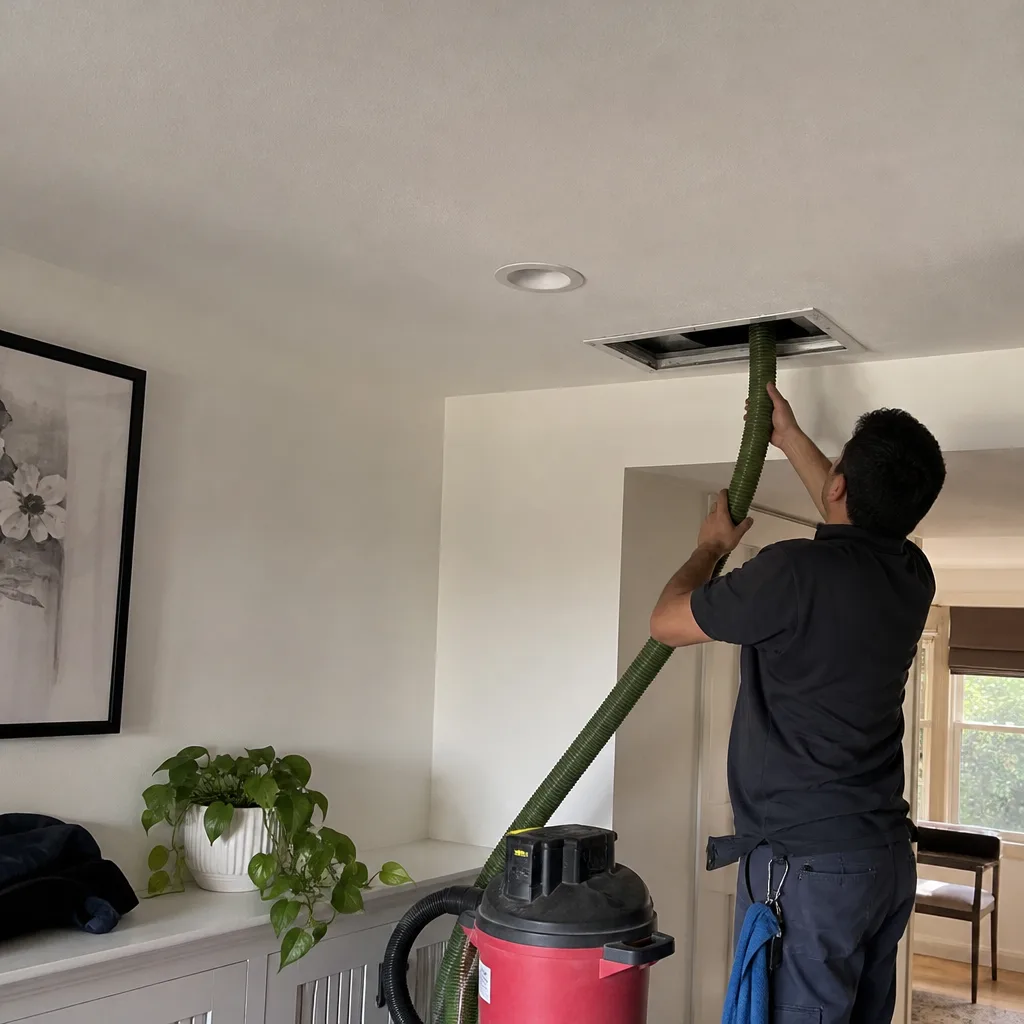
For the work itself, expect negative-pressure extraction. The equipment should be pulling air out of your ducts, not pushing air around inside them. Professional-grade setups from brands like Rotobrush or Nikro create a sealed vacuum on the duct system and draw debris out to the truck-mounted collection unit. This is the actual mechanical process, and it is the reason the air in your home does not get dustier during the job. If the technician is just shoving a rotating brush down each register with a shop vac at the other end, you are not getting what you paid for. You are getting the appearance of cleaning.
Expect the job to take several hours, not 30 minutes. A proper whole-system cleaning on a typical San Francisco home, meaning a modest single-family house with 10 to 15 vents and a full return system, takes between three and five hours depending on access. Anyone who finishes a “full system” in under an hour is not cleaning the whole system. They are cleaning the registers, which is the visible part, and leaving the rest. That is the most common false economy in the industry, and it is why we tell customers to expect the technician to be there for a while. Real work takes time.
Step 7: After the Job – Documentation That Proves the Work Was Done
The job ends in your favor when you can verify, with your own eyes, that the work was actually performed. A legitimate contractor provides that verification without being asked. Here is what to expect.
Before-and-after photos of your actual ducts. Not stock images from a marketing folder. Real photos, with the date stamp, showing the interior of your ducts before cleaning and the same ducts after. We provide these on every job because they serve two purposes. First, they prove to you that the work was done, which is the simplest and most reliable verification there is. Second, they give you a baseline for next time. You know what your clean ducts look like, so you know what to compare against in three to five years.
A written summary of the work performed. The tech should hand you or email you a summary that lists the scope of work performed, the warranty or guarantee period in writing, and any recommendations for follow-up. This document should match the estimate. If the estimate said “all accessible supply and return ducts,” the summary should say the same. If the summary says “all accessible supply ducts” but the estimate said “supply and return,” ask why before the tech leaves. That is the moment to resolve any discrepancy, not three weeks later.
The guarantee should be restated in writing. On our jobs, the 365-Day Done Right Promise is referenced on both the estimate and the final summary. If anything, the summary is the more important document, because it is the one you will keep filed away. It is the thing you will pull out if something goes wrong in month ten. It is the thing that says, in writing, what we promised and for how long.
Your air should feel different, but not magically different. People expect a dramatic transformation after duct cleaning, and sometimes that happens, especially in older San Francisco homes with construction debris in the system. More often, the difference is subtle: less dust settling on surfaces, fewer allergy flare-ups, a system that cycles on and off without that musty first-minute smell. If someone promised you a twenty-percent reduction in your energy bill, that is a red flag you missed earlier. Duct cleaning improves indoor air quality and gives your system a clean baseline. It does not replace air purifiers, does not cure asthma, and does not make your HVAC system new again. Anyone who claims otherwise is selling something other than duct cleaning.
If the work came with recommendations, like a Dryer Vent Cleaning in San Francisco or a repair to a disconnected run, decide on those before the tech leaves if you can, or schedule a follow-up when you are ready. No pressure, no deadlines. A recommendation is information, not a sales pitch. Our job is to tell you what we saw and let you decide what to do next. The estimate for any recommended work will be written, fixed, and good when you are ready to act on it.
Common Mistakes to Avoid
- Hiring on price alone. The $49 coupon is the entry point for a business model that relies on finding expensive problems once the technician is inside. San Francisco has too many of these operators, and the victims are almost always people who chose the lowest number on a flyer.
- Skipping the CSLB complaint history. Checking that a license is active takes 30 seconds. Checking the complaint history takes four minutes. The four minutes are the more valuable investment.
- Accepting per-vent pricing. Any estimate that prices per vent or per register is an open-ended invoice. The final number will be whatever the technician decides it is, and you will not know until the work is done.
- Not asking who will be at your door. If the company cannot tell you the technician’s name before the visit, they do not know who they are sending. That is not a scheduling issue; that is a business model.
- Accepting a verbal guarantee. A guarantee that is not in writing does not exist. If the company will not put it on paper, that is because they do not want a written record of something they are not willing to honor.
- Confusing duct cleaning with air quality miracles. Duct cleaning removes built-up debris from your ducts. It is not a cure for asthma, it does not replace an air purifier, and it does not transform a 30-year-old HVAC system into a new one. Honest contractors tell you this; predators do not.
- Treating all San Francisco contractors as the same. The difference between a legitimate operator and a bait-and-switch operator is visible before the job even starts, in the license class, the bond amount, the pricing structure, the technician verification, and the written guarantee. The checks take 20 minutes. The regret lasts a lot longer.
See the difference
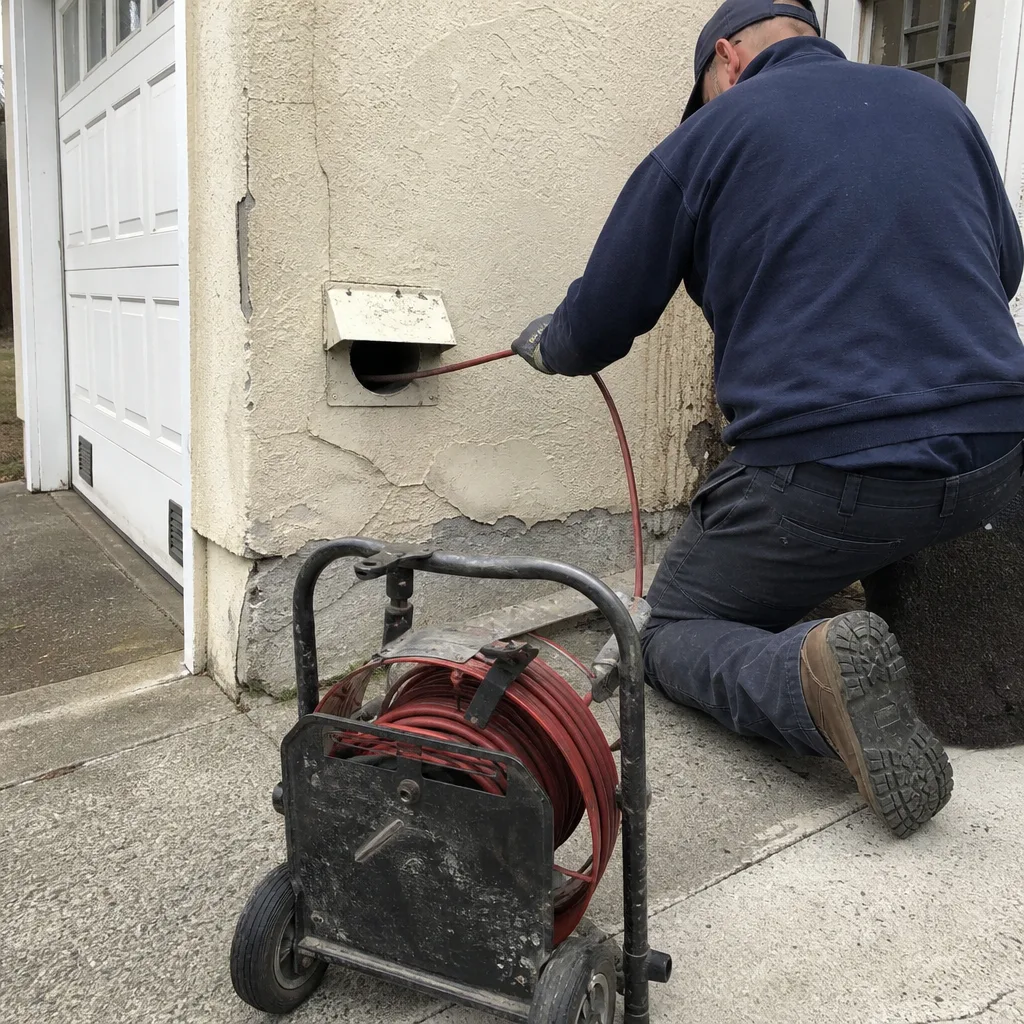 Before
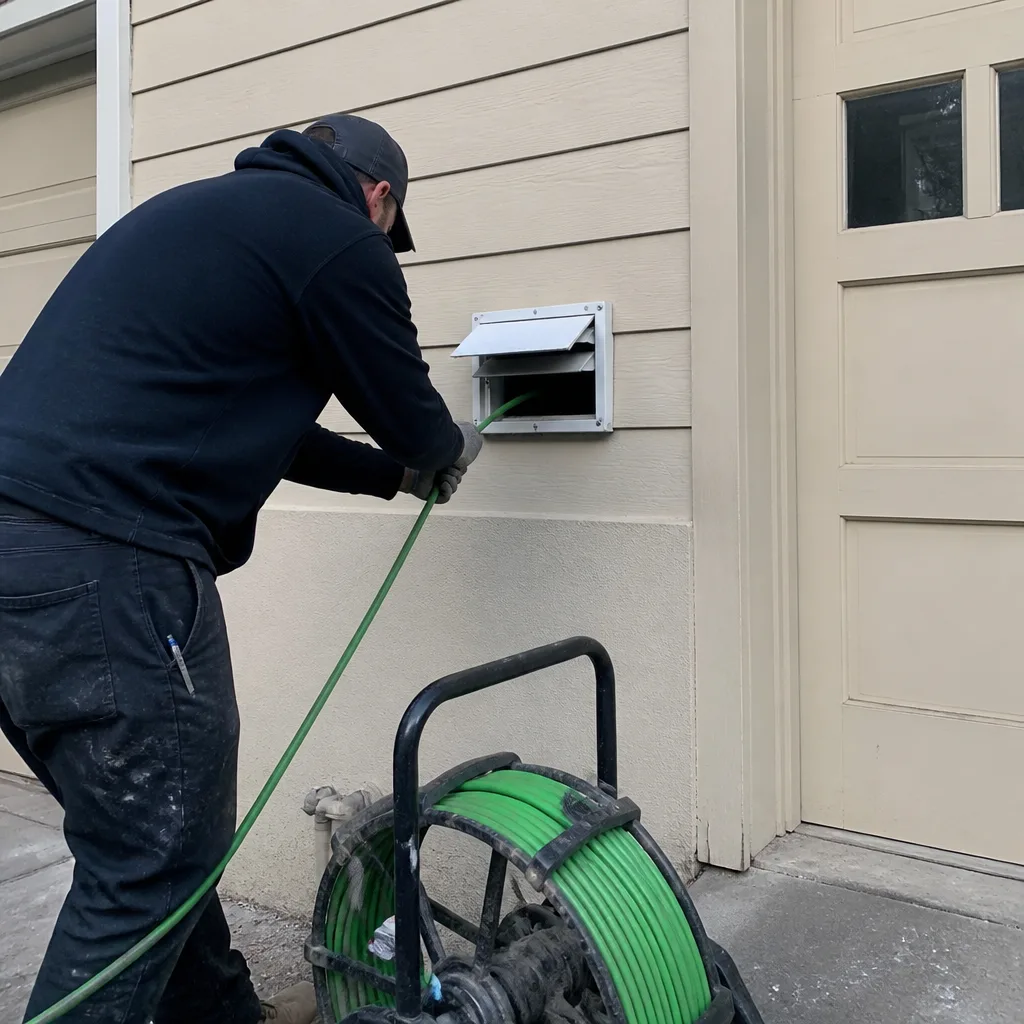 After
After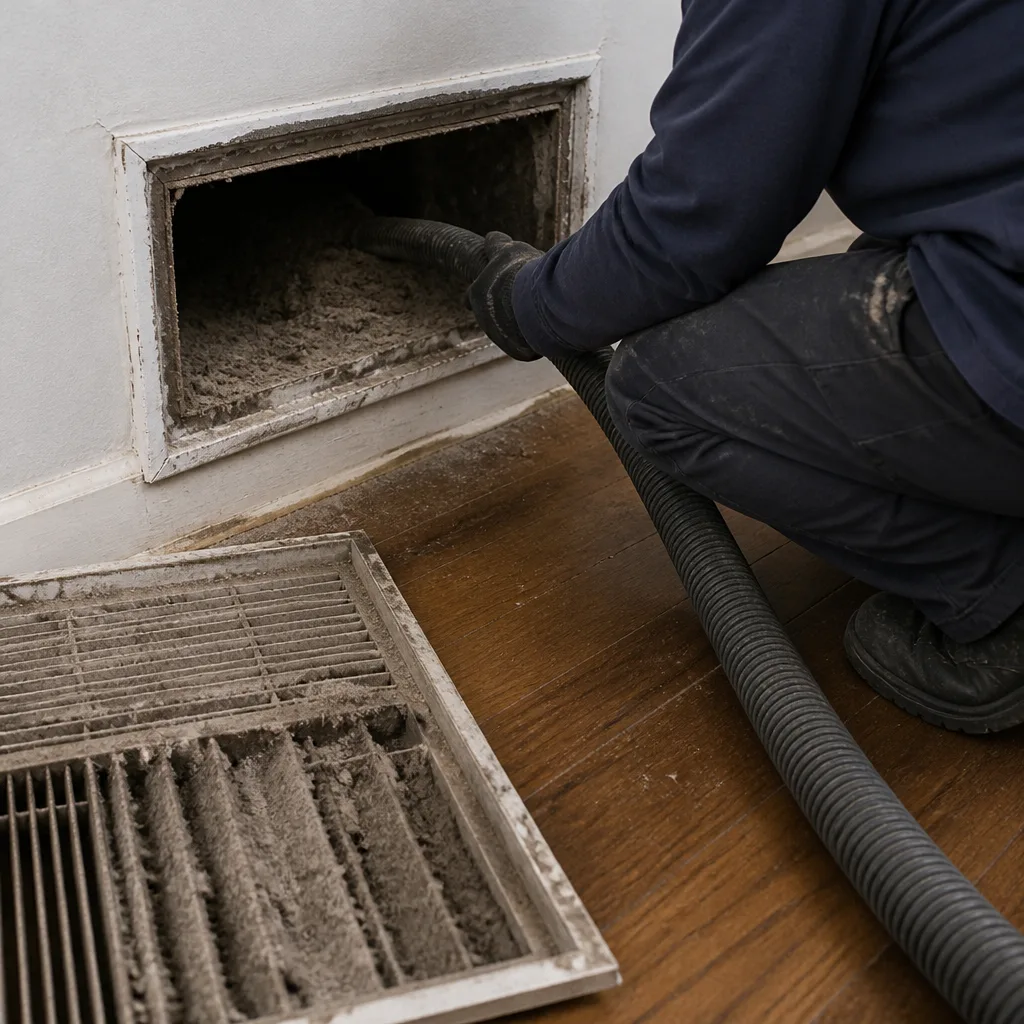 Before
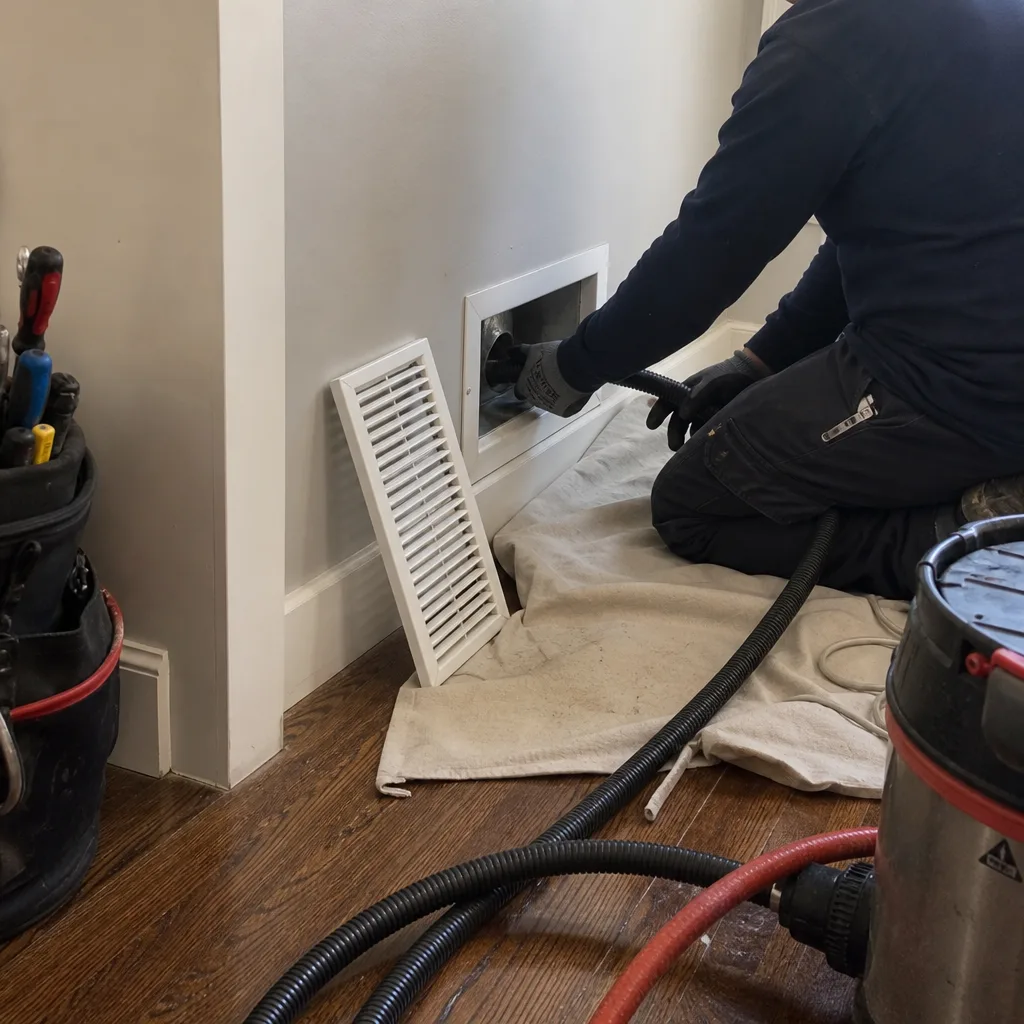 After
After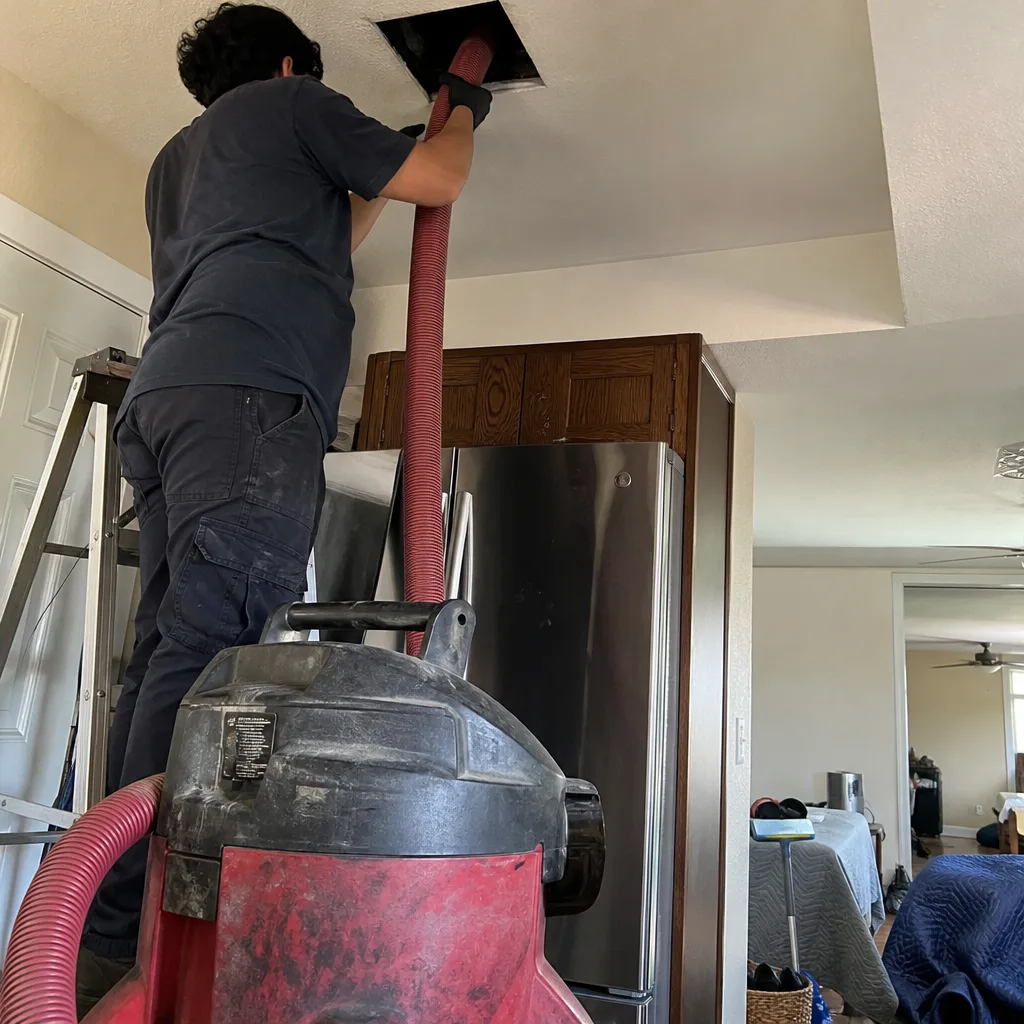 Before
 After
AfterWhen to Call a Professional
Some signs should prompt a call to a professional rather than continued research. If you have visible dust blowing from your registers when the system runs, mold-like growth inside the ductwork or on register covers, unexplained musty odors that worsen when the HVAC cycles on, or a recent home renovation that coated your ductwork in drywall dust, it is time. If you have never had your ducts cleaned and you have lived in your San Francisco home for more than five years, it is also time, especially if the home predates 1980. These are not scenarios where a DIY fix is appropriate, and they are not scenarios where you want to be learning on the fly. Linden Air Duct San Francisco offers free estimates in San Francisco. Call (951) 527-6259 and speak to a live person any time, day or night, and get a written price before any work begins.
Frequently Asked Questions
Air duct cleaning in San Francisco typically costs between $350 and $700 for a whole-system cleaning of a standard single-family home, depending on the size of the home, the number of vents, the accessibility of the ductwork, and the condition of the system. Per-vent pricing should be avoided because it allows technicians to inflate the total once they are inside. A legitimate contractor quotes a fixed whole-system price in writing before any work begins. Call (951) 527-6259 for an exact quote – estimates are free.
Some duct cleaning quotes in San Francisco are cheaper because they are bait. The operator advertises a price that covers the visit but not the job, then finds reasons to charge more once the technician is in the home. Common tactics include pricing per vent rather than per system, “discovering” additional vents or returns, or claiming that hidden damage requires urgent repair. A legitimate whole-system price includes the entire job, and the estimate specifies what is covered. Suspiciously low quotes are always subsidized by something, and that something is usually you.
Ask for before-and-after photos of your actual ducts, with date stamps, showing the interior before and after cleaning. A legitimate contractor provides these on every job, along with a written summary of the work performed and the guarantee restated in writing. If a contractor cannot or will not provide photographic proof of the work, that is a red flag. We provide before-and-after photos on every job in San Francisco, because the simplest way to prove the work was done is to show you the inside of your ducts.
In San Francisco, air ducts should be cleaned every three to five years under normal conditions. Homes with pets, residents with allergies or respiratory conditions, recent renovations, or locations near the coast where salt air and fog keep ducts damp may need more frequent cleaning, in the two to three year range. If you have never had your ducts cleaned and your home is more than 20 years old, schedule a cleaning sooner rather than later. The climate in a neighborhood like the Sunset District is different from the climate in the Mission, and the right interval reflects your actual conditions, not a national average.
Duct cleaning itself is legitimate and worth doing when it is done properly with negative-pressure extraction equipment and honest pricing. The scam reputation comes from bait-and-switch operators, particularly the $49 coupon operations that use low advertised prices to get into homes and then inflate the invoice. A legitimate duct cleaning in San Francisco costs a fair price that reflects the actual work, includes a written estimate before work begins, and delivers verifiable proof of the work. The industry’s reputation problem is real, and it is caused by the operators this guide teaches you how to screen out. Call (951) 527-6259 for a specific quote for your home.
Ask three questions before hiring any duct cleaning company in San Francisco: First, “How do you price the job?” and listen for per-vent pricing, which should disqualify the contractor immediately. Second, “Who exactly will be at my door?” and expect a name and photo sent before the visit. Third, “What does your guarantee say in writing?” and expect a specific term, such as 365 days, with an explanation of what happens if the work is not right. Then verify the California license, including the C20 class, the bond amount, and the complaint history. These checks take about 20 minutes and eliminate the vast majority of problem operators.
No, air duct cleaning in San Francisco does not require a building permit. It is a maintenance service, not a structural or mechanical installation. However, the contractor performing the work must hold a California contractor’s license with the C20 classification, and that license must be active. If a repair is identified during the cleaning, such as a replacement duct run or a new vent, the repair may require a permit depending on its scope, and a legitimate contractor will tell you this before any work proceeds. We always verify permit requirements for any repair work before starting, because the price you agreed to should include everything the job legally requires.
The Bottom Line
Hiring an air duct cleaning contractor in San Francisco is a screening process, not a search. The bad operators are easy to eliminate with twenty minutes of verification: check the C20 license class, the bond amount, and the CSLB complaint history. Then ask three questions about pricing, technician identity, and written guarantees. The pricing should be whole-system and fixed in writing before work begins. The technician should be named, photographed, and verified before the visit. The guarantee should be in writing with a number: 365 days. Everything else is detail. If a contractor passes those checks, you are in good hands. If they stumble on even one, call the next name on the list. You will find the right company faster than you think, and the work will be done the way it should be: honestly, thoroughly, and with a paper trail that protects you.
Written by Marcus Veale, Owner at Linden Air Duct San Francisco, serving San Francisco since 2004.