
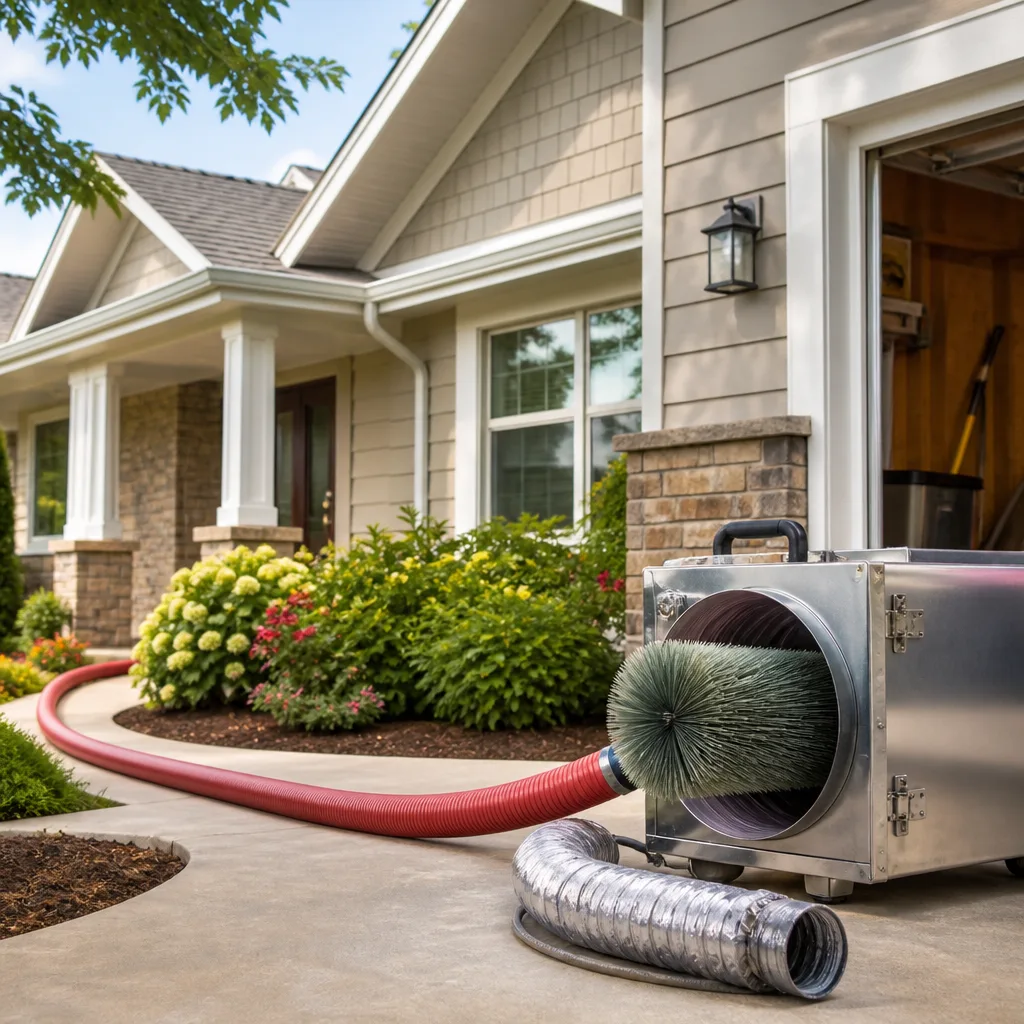
 Whole-home duct cleaning
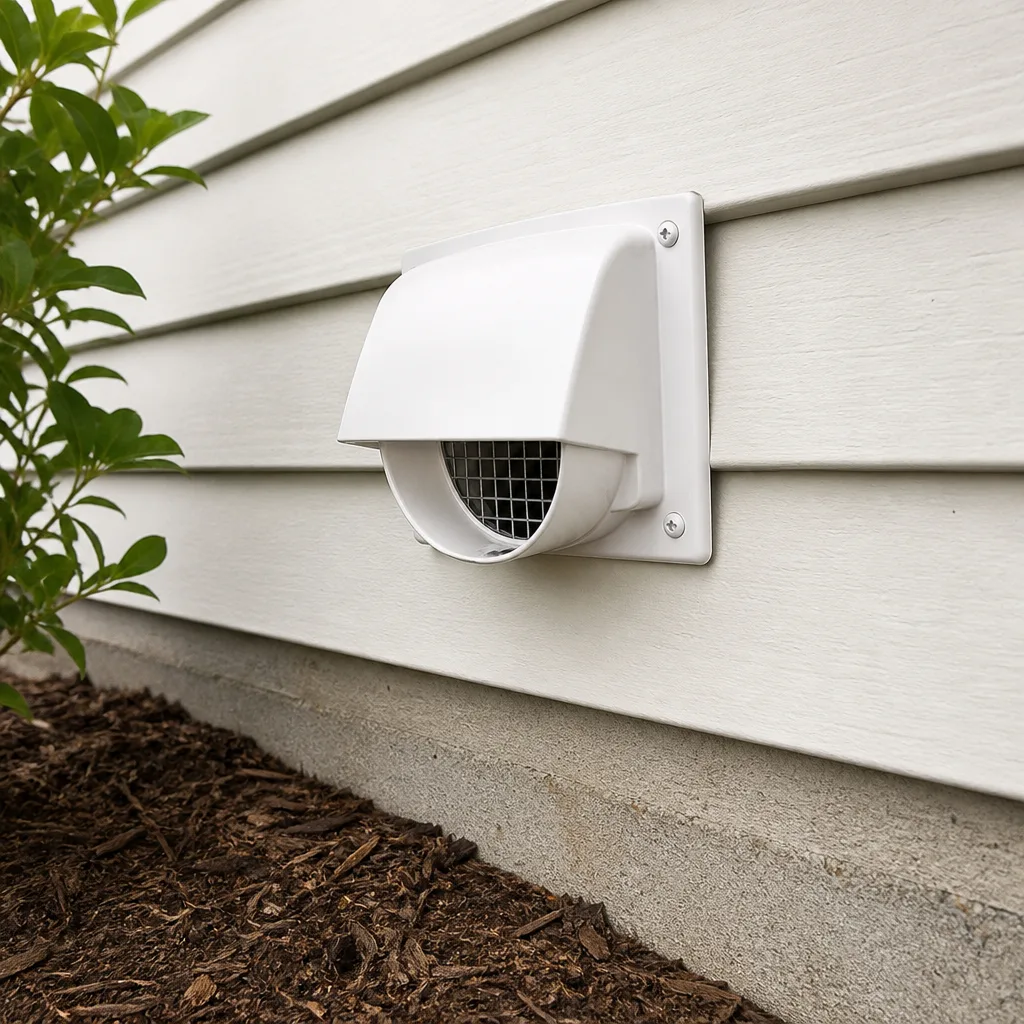 Dryer vent cleaning
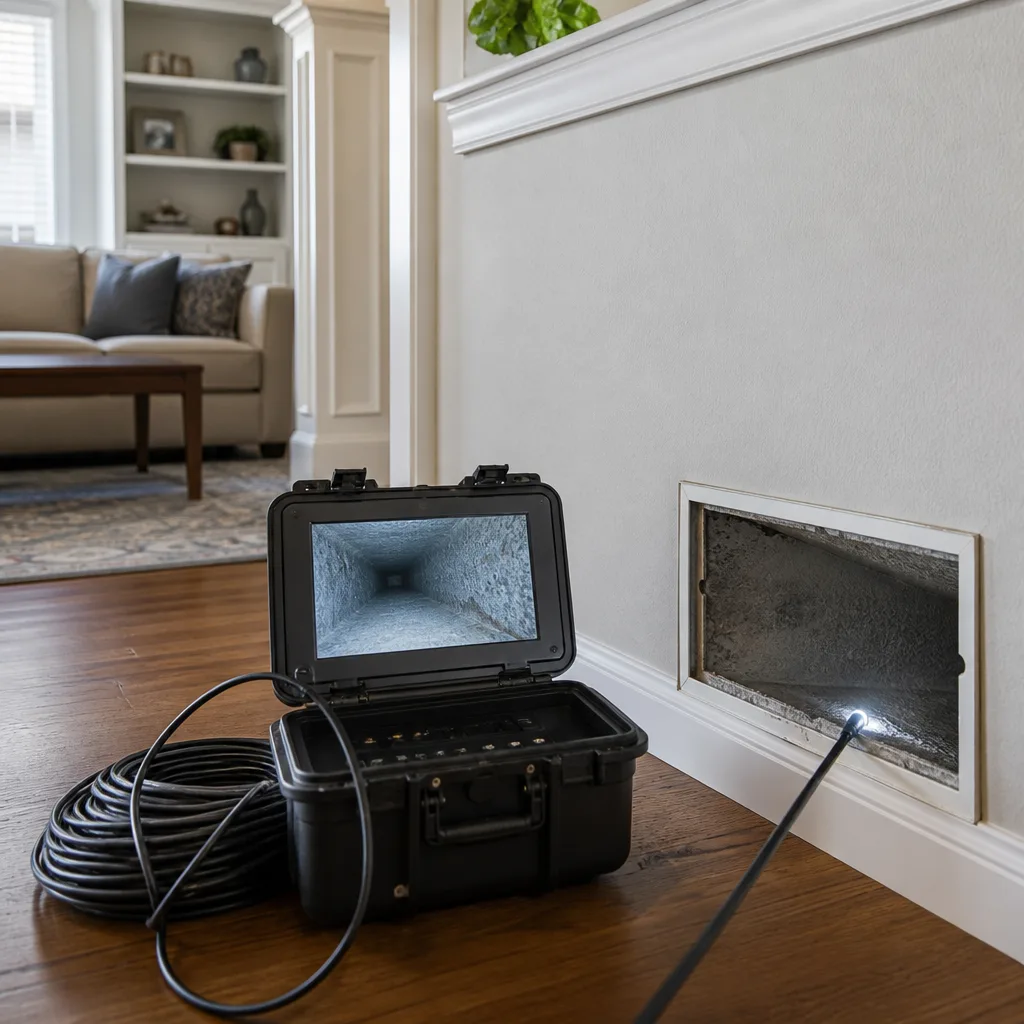 Camera inspection
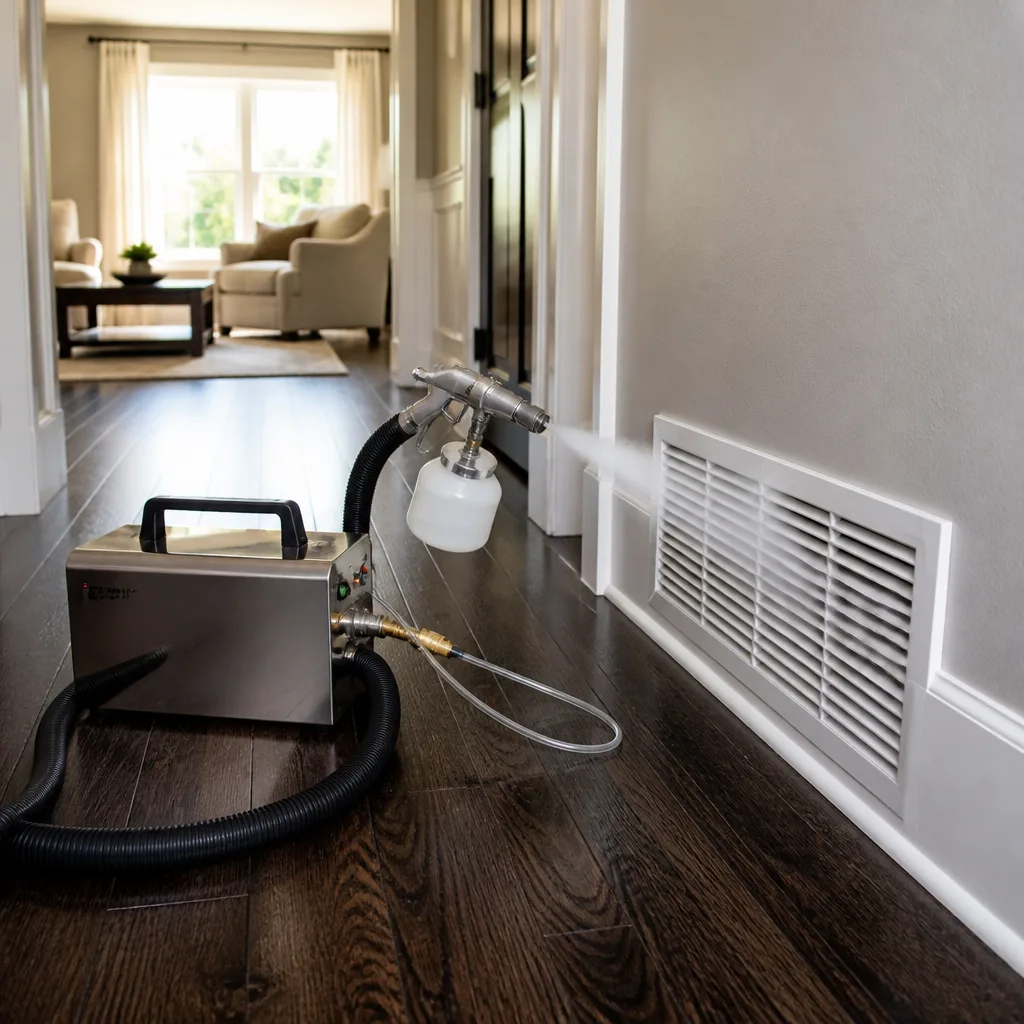 Sanitizing & deodorizing
Whole-system duct and dryer vent check with before-and-after photos - you see exactly what came out of your vents
That "$99 whole-house special" is a bait ad - the real number appears once they are in your hallway, or the "clean" is a shop-vac at the register. We photograph the inside of your ducts before and after instead.
Abatement Technologies Vent Sanitizing: The San Francisco Owner’s Guide
We stock and install Abatement Technologies-compatible vent sanitizing components throughout San Francisco, with typical installed replacement costs running $340 to $680 depending on your unit’s series and what failed. Most jobs are completed in a single visit since our trucks carry the common Abatement Technologies sanitizer parts, and we’ll confirm your exact model match before we ever ring your doorbell. The usual story we hear from San Francisco homeowners starts with a faint musty smell that lingers after the system cycles, or a sanitizing lamp that won’t stay lit, and by the time they call us, the indicator light has been blinking for weeks.
Abatement Technologies builds vent sanitizing gear differently than the budget equipment we see in a lot of Bay Area ductwork. Their systems are designed for actual pathogen and odor reduction, which means tighter tolerances on the bulb housing, real UV-C output ratings, and control boards that don’t forgive shortcuts. When a component fails, guessing at a replacement usually makes things worse. We’ve pulled more than one generic UV bulb out of an Abatement Technologies housing in Pacific Heights that was the wrong wattage and had been quietly doing nothing for months. Getting the right part matters, and it matters more in San Francisco where coastal moisture keeps duct interiors damp enough to feed whatever the sanitizer is supposed to be killing.
Which Abatement Technologies Models This Applies To
The main compatibility split in the Abatement Technologies line comes down to your unit’s series. The Air Guard series and the more common VP line use different lamp lengths and ballast ratings, and they are not interchangeable. We see mostly VP-series units in San Francisco homes, but plenty of Air Guard units turn up in larger Edwardian properties where the original HVAC was sized for big air volume. If you open the access panel on your sanitizer housing, you’ll find a model label with the series name and a wattage stamp. That stamp is the single most useful piece of information you can give us on the phone because it rules out about three-quarters of the parts confusion before we even schedule the visit.
OEM Abatement Technologies lamps and ballasts are the right call in most cases. The housings are sized precisely, the reflectors are tuned to the bulb output, and a quality aftermarket lamp with the wrong arc length will underperform even if it “fits.” We do carry a couple of proven aftermarket ballast replacements for older VP-series units where the OEM part has been discontinued, but we’ll only recommend one if we know it matches the electrical draw of your specific board. That’s the part where a lot of online parts sellers go wrong: they ship a ballast that powers the lamp but overheats the board, and six months later you’re replacing the whole control module instead of just the lamp. We’d rather tell you the honest answer the first time.
Styles & brands we work with
Signs Your Abatement Technologies Vent Sanitizing Is Failing
- The indicator lamp won’t turn on or blinks erratically. On most Abatement Technologies units, a blinking indicator means a failed bulb, not a failed board. The ballast senses the dead bulb and throws a fault code. Replacing the lamp usually resolves it, and we always test the ballast during the swap to rule out a deeper electrical problem.
- You can see the UV-C lamp through the chassis or it looks dark, even though the fan runs. UV-C lamps are rated for roughly 9,000 to 12,000 hours of output. After that they still glow slightly but the sanitizing wavelength drops off sharply. In San Francisco, where systems often run year-round for humidity control, that lifespan translates to roughly 18 to 30 months of actual useful output, not the “three years” printed on some retail boxes.
- The air handler cycles more often but the room air never smells clean. When the sanitizer stops working, the natural odor load of damp San Francisco return air comes back fast. This is the one we hear most from homeowners in the Richmond and Sunset districts, where fog moisture works into ductwork all summer long.
- You hear a faint buzzing or clicking from the sanitizer housing. That’s almost always a failing ballast, not the lamp itself. Abatement Technologies ballasts are quieter than most, so any new buzz is worth a look. The buzz is the ballast arcing internally as it struggles to maintain voltage, and it will eventually take the control board with it.
- The unit trips a breaker or the fuse in the HVAC control box blows. When a sanitizer ballast shorts, it can draw well above its rated amperage and pop the low-voltage fuse that protects the whole system. If your air handler went dead and the sanitizer was the last thing working, pull the sanitizer’s power lead and check the fuse. Better yet, call us. A shorted ballast is a fire risk if it’s left powered.
See the difference
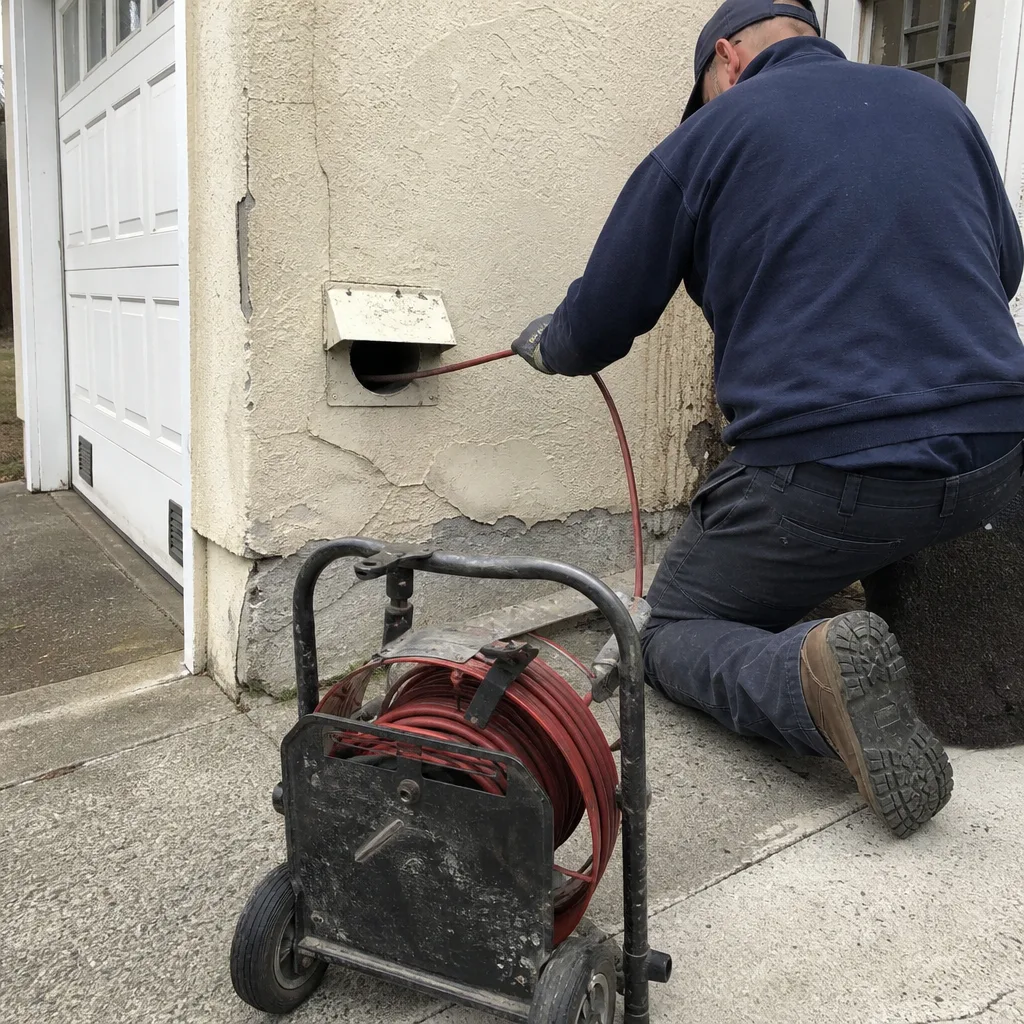 Before
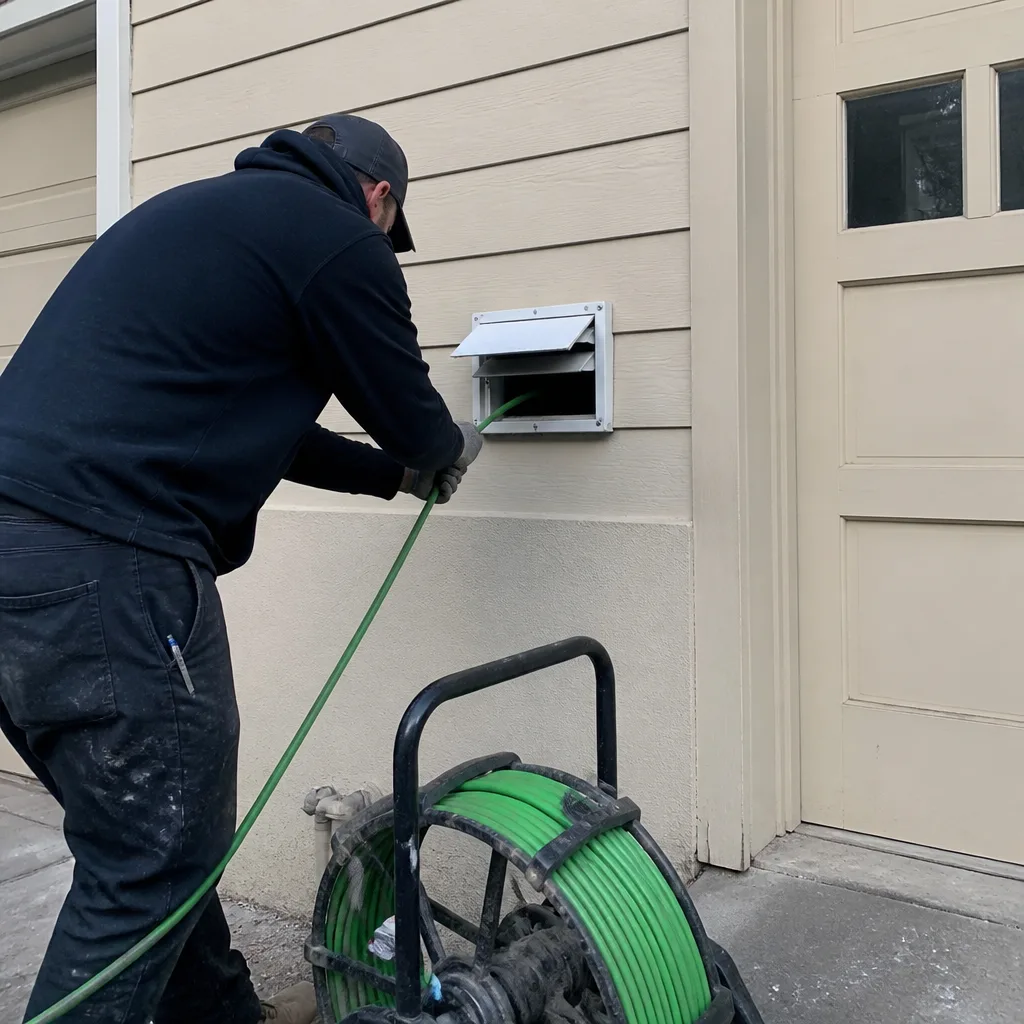 After
After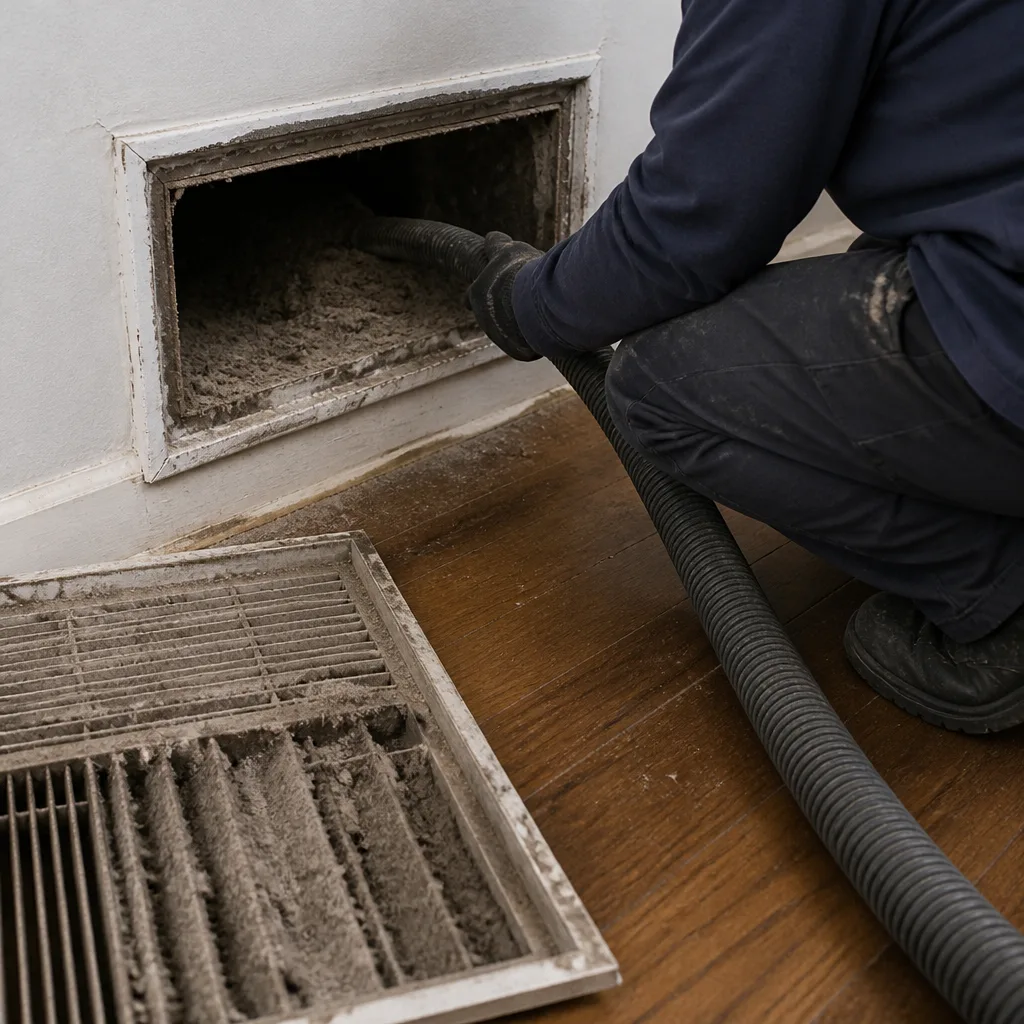 Before
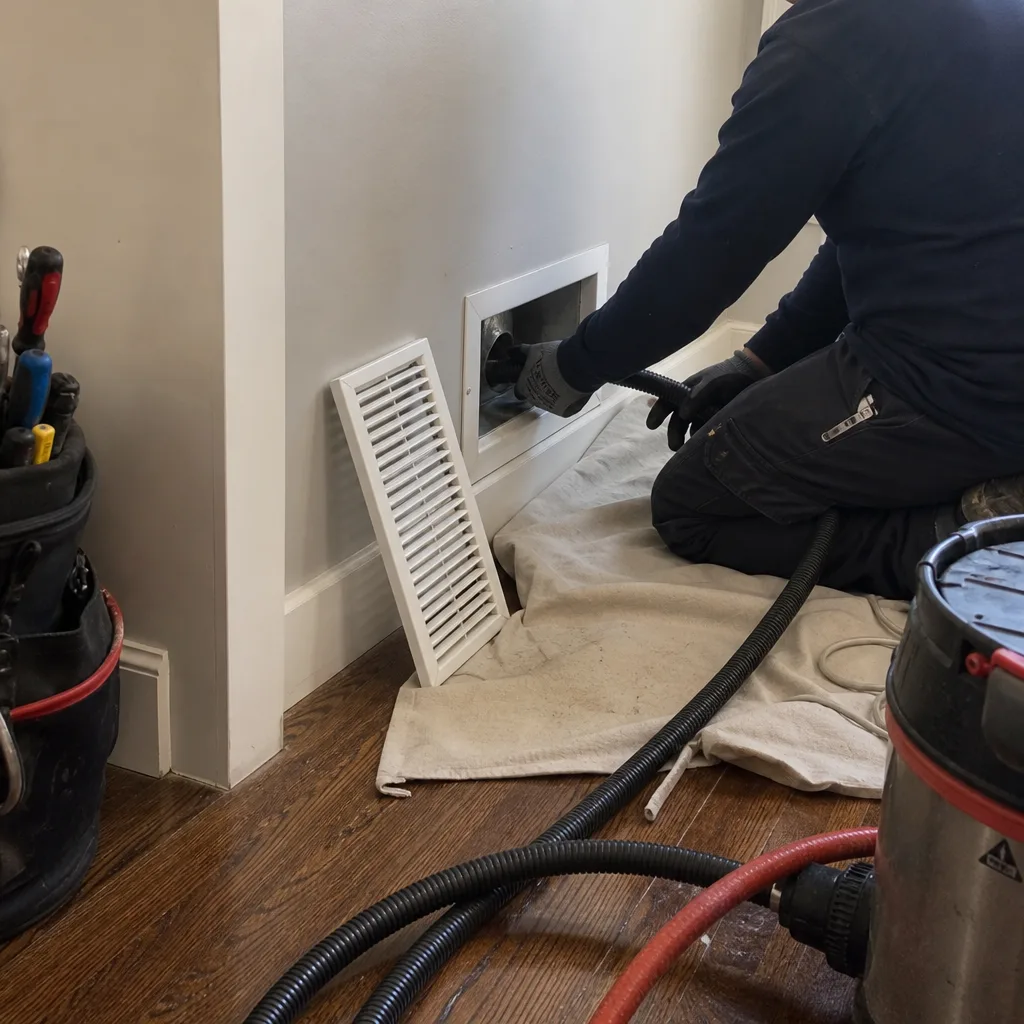 After
After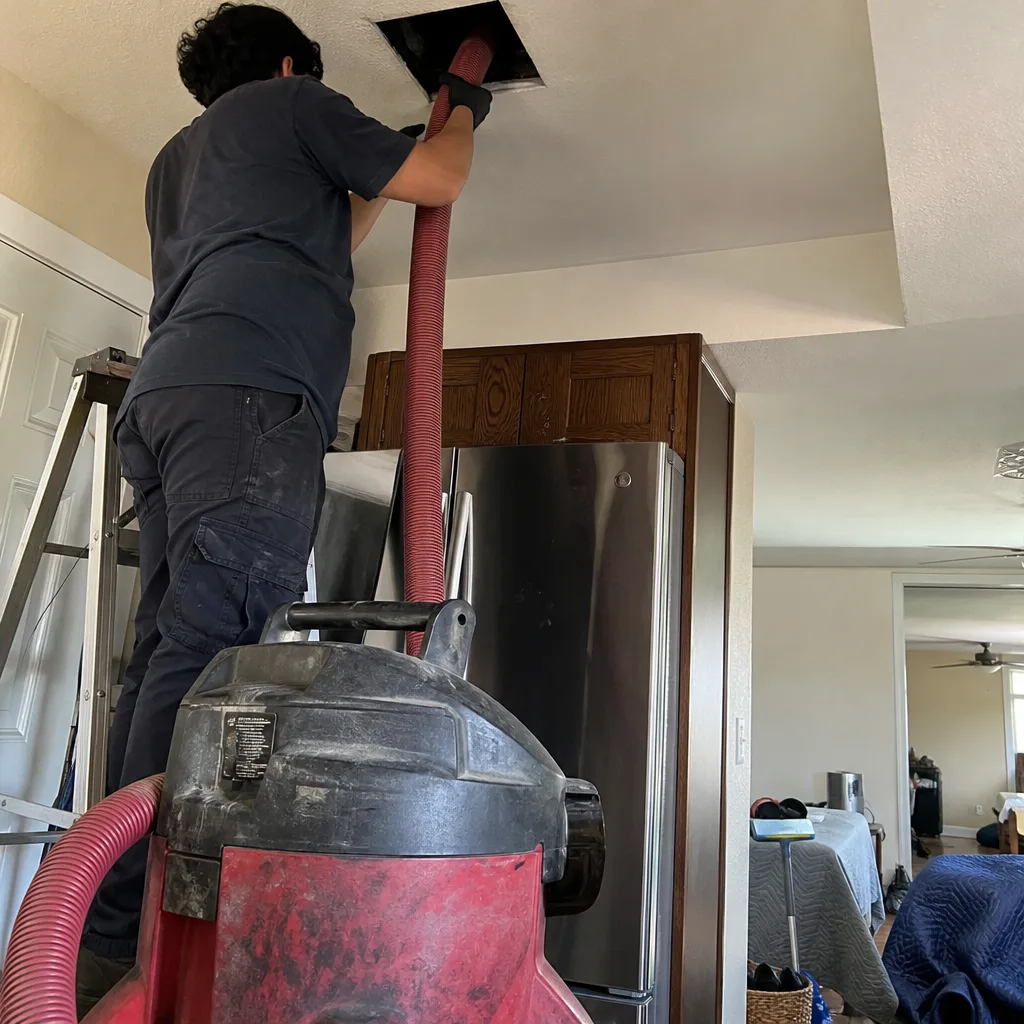 Before
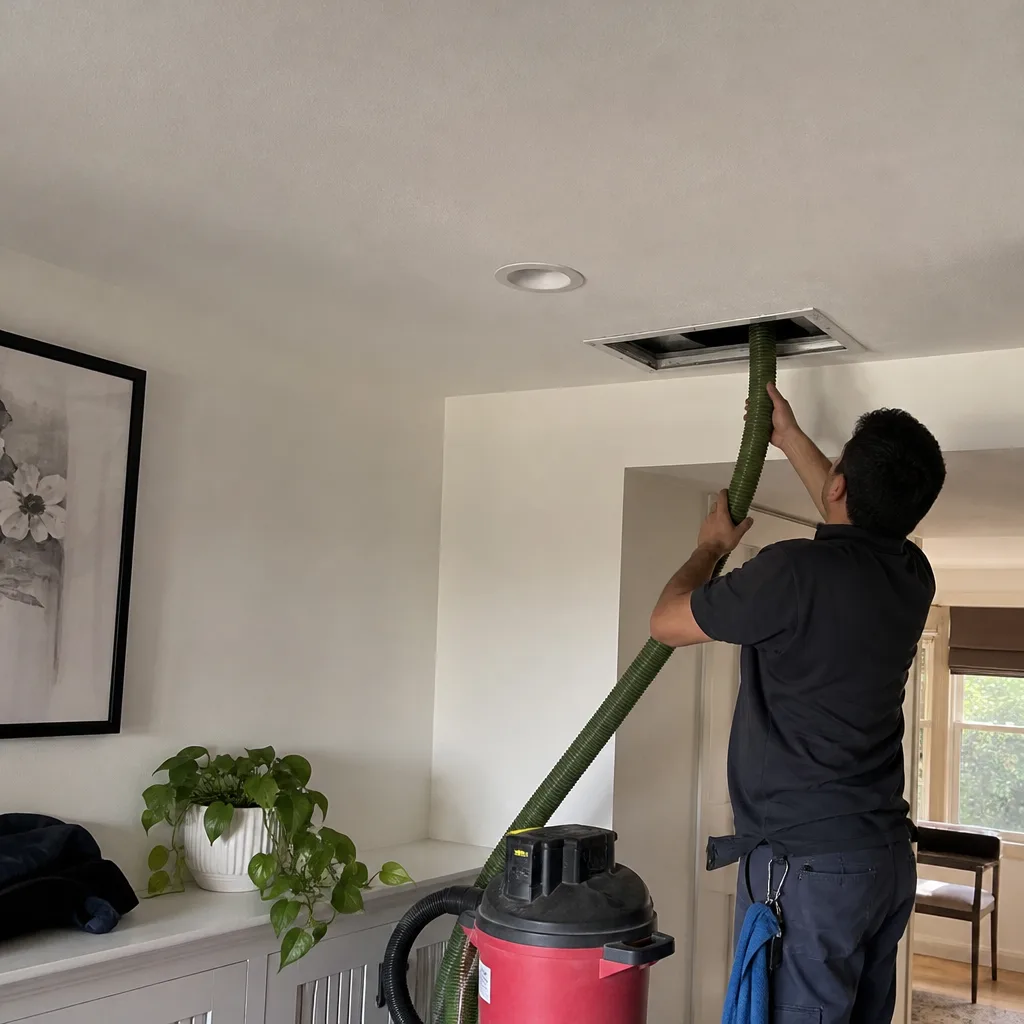 After
AfterReplacement Cost & What’s Included
In San Francisco, you should expect to pay $340 to $680 installed for Abatement Technologies vent sanitizing replacement work. A straight UV-C lamp swap on a VP-series unit typically lands around $340 to $420 including the OEM lamp, the service call, and verification that the ballast is still putting out correct voltage. A ballast replacement runs higher, usually $460 to $580, because the part itself is more expensive and we take the time to test the control board after the new ballast is in. If both lamp and ballast are dead, which we see in maybe one out of every four calls, you’re looking at the top of the range around $680.
Here’s the breakdown so you know exactly what you’re paying for:
- UV-C lamp (OEM or verified equivalent): $90 to $180 depending on series and wattage
- Ballast replacement: $160 to $260 for the part
- Labor and on-site testing: $120 to $220, including verification of lamp output and ballast draw
- Written price before we start: included, always, no exceptions
Every repair we do carries our 365-Day Done Right Promise in writing. If the lamp we install fails within a year, we come back and replace it at no charge. If the ballast fails, same deal. We put that on paper before the first screw comes out. No surprises, no “we found something else while we were in there.”
DIY or Call Us?
There is a real electrical hazard here, and we want to be plain about it. An Abatement Technologies sanitizer runs on line voltage inside the housing, and even with the breaker off, the ballast can hold a charge. If you’re not comfortable working inside an energized cabinet, and most homeowners shouldn’t be, don’t open the sanitizer housing. What you can safely do is check the indicator light from outside the unit, note the model number and wattage stamp from the label, and call us. That label information alone saves you a diagnostic trip.
We’ve also seen homeowners buy the right lamp online and then crack the quartz sleeve during install because the housing clips are tighter than expected. A cracked sleeve lets moisture into the lamp chamber, and in San Francisco’s damp air that kills a new lamp within weeks. We replace a lot of those too. If you want us to handle the whole thing, call (951) 527-6259 and we’ll match the part to your exact unit before we schedule the visit. The written price is set before we arrive.
FAQs
Real-world lifespan in our coastal climate is 18 to 30 months of effective output, even though the lamp may still glow after that. The high humidity and year-round runtime in many San Francisco homes shorten the useful sanitizing window compared to drier inland areas. We recommend checking your unit at the two-year mark and testing output before assuming it’s still doing the job. Call (951) 527-6259 if you’re not sure how old your lamp is; we can usually date it from the serial stamp.
Sometimes. A failed lamp is a replacement, not a repair, but a failed ballast on a VP-series unit can often be swapped without touching the rest of the system. If the control board itself has failed, replacement is usually the more honest option. We’ll tell you which one you’re looking at before any parts get ordered, and the price is in writing before we start work.
Most Abatement Technologies lamp or ballast replacements take 60 to 90 minutes on site, including testing and cleanup. If we need to remove and reseat the housing, it can stretch closer to two hours. We’ll give you a realistic time window when we confirm the part match, and we don’t book jobs back-to-back in a way that makes us rush yours.
Yes, we keep common VP-series and Air Guard lamps, ballasts, and quartz sleeves on our service vehicles, so most San Francisco jobs are completed same-visit. If your unit needs a less common part, we’ll have it in hand before we schedule the appointment. We also carry parts for Lennox, Trane, and Carrier systems, but Abatement Technologies sanitizer work is something we handle regularly.
If your Abatement Technologies vent sanitizer is flashing, buzzing, or just not doing the job, call us at (951) 527-6259. We’ll match the part to your exact model, put the price in writing, and get it fixed right. Marcus and our team have been working on Bay Area air systems long enough to know that the honest answer is the only one worth giving.
Written by Marcus Veale, Owner, Linden Air Duct San Francisco at Linden Air Duct San Francisco, serving San Francisco and nearby areas.