
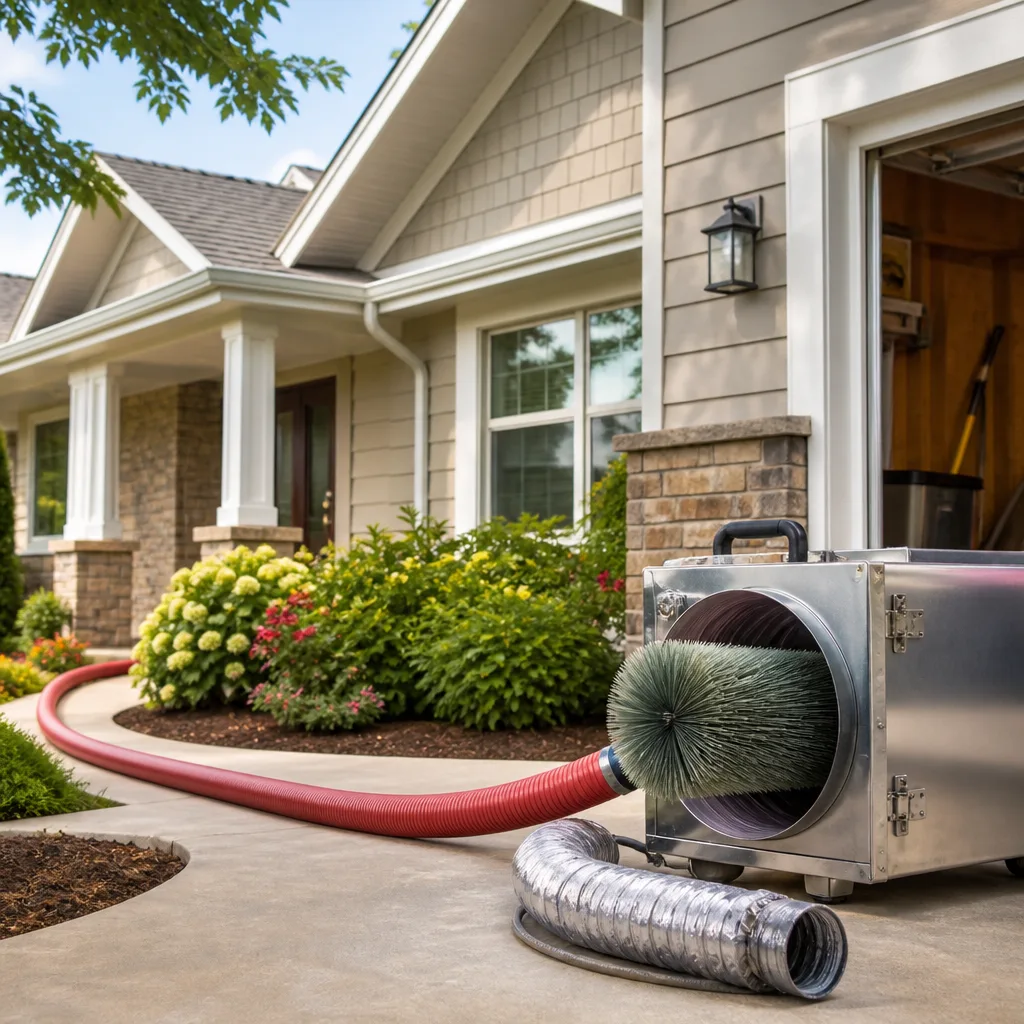
 Whole-home duct cleaning
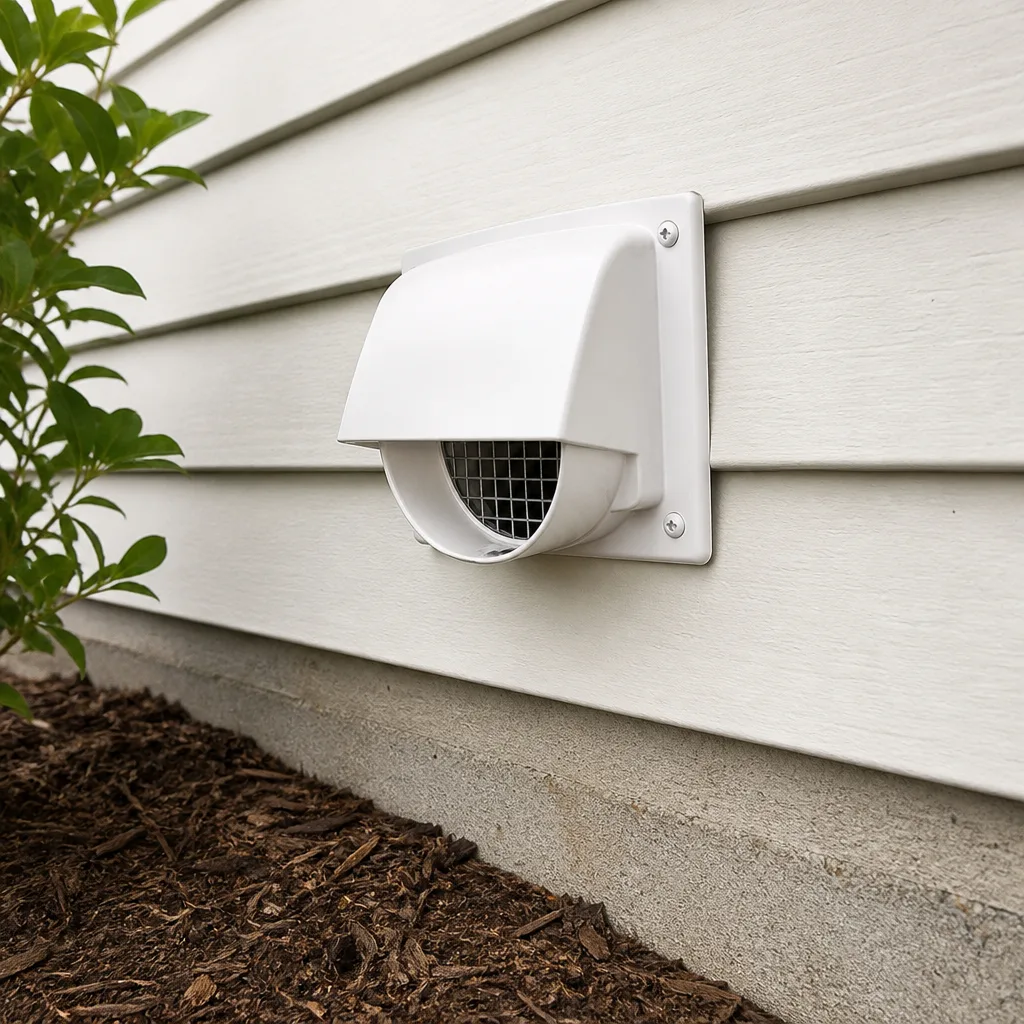 Dryer vent cleaning
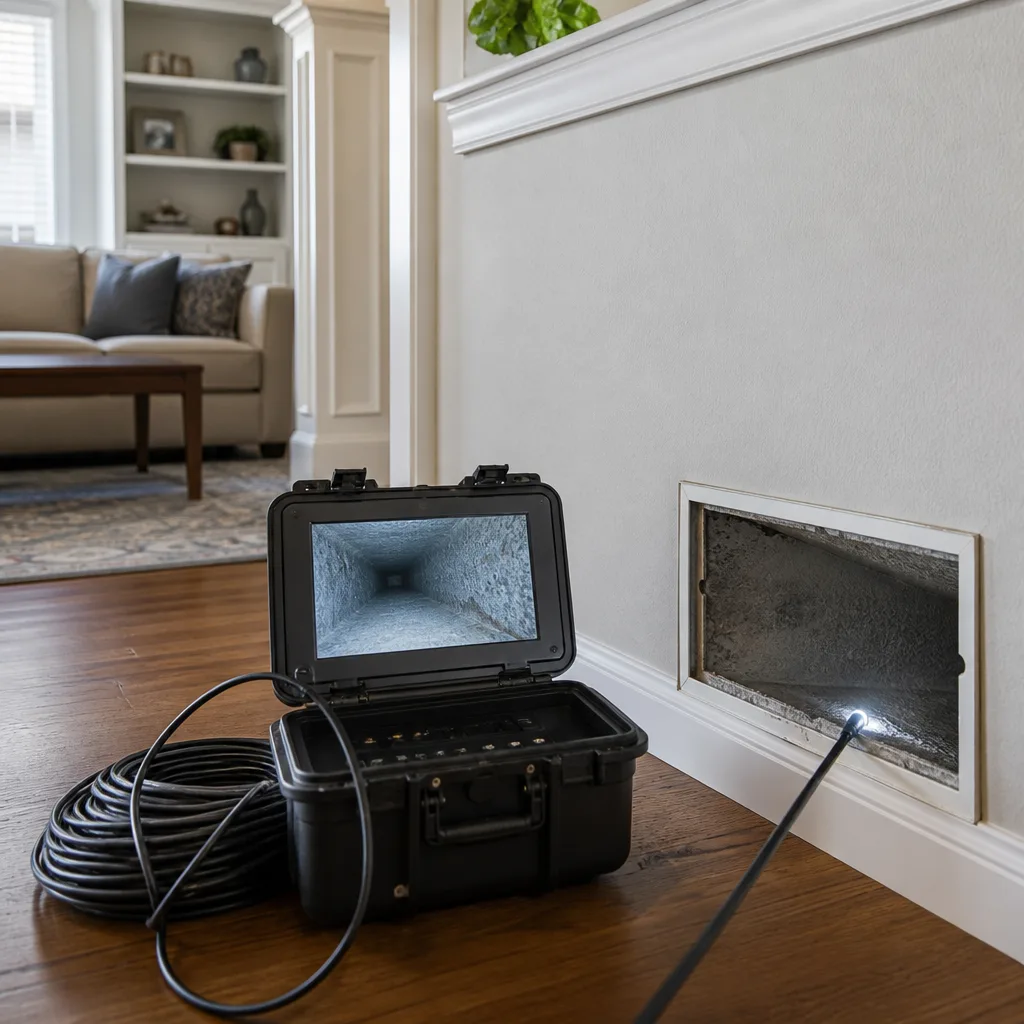 Camera inspection
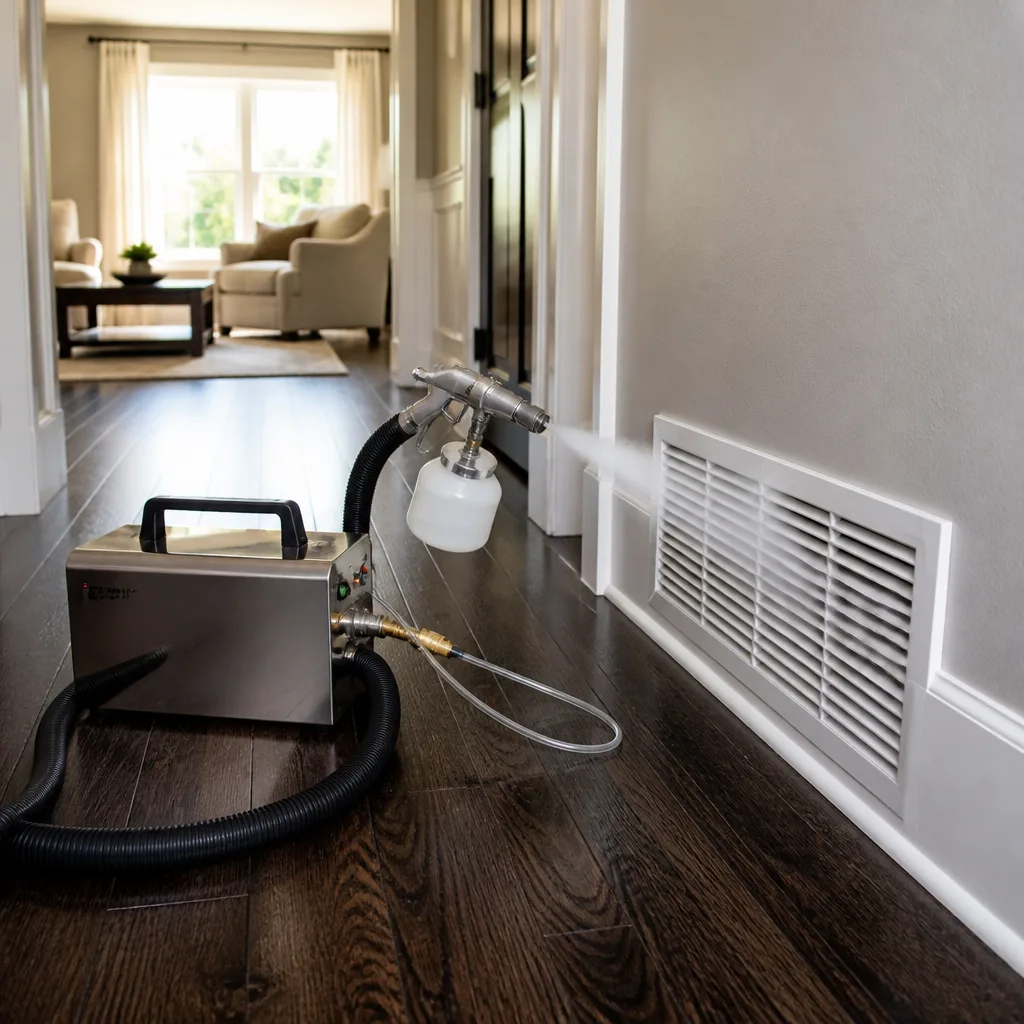 Sanitizing & deodorizing
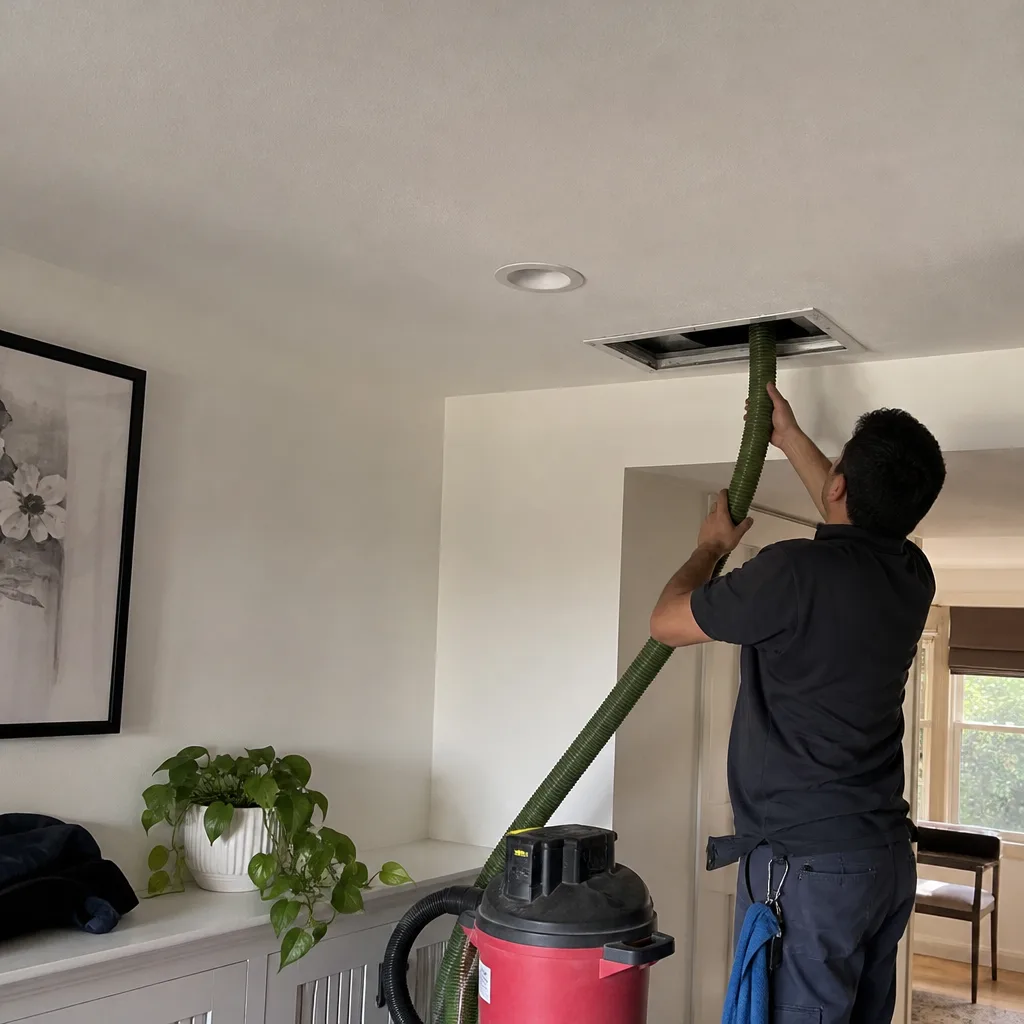
Whole-system duct and dryer vent check with before-and-after photos - you see exactly what came out of your vents
That "$99 whole-house special" is a bait ad - the real number appears once they are in your hallway, or the "clean" is a shop-vac at the register. We photograph the inside of your ducts before and after instead.
Honeywell Vent Sanitizing: The San Francisco Owner’s Guide
We stock and install Honeywell-compatible vent sanitizing components for homeowners across San Francisco, with typical installed costs running between $185 and $420 depending on which Honeywell model you have and whether we’re replacing a UV lamp, a bulb socket, or the ballast. Most San Francisco homes we see are running the Honeywell UV2400 or the larger UV5000 series, and we carry parts for both on the truck. The usual way owners discover the problem is a faint smell that never quite leaves the ducts, or a Honeywell indicator light that’s gone dark even though the fan still runs.
The Honeywell vent sanitizing unit is the part of your system that sits inside the supply duct and uses UV-C light to knock back mold, bacteria, and whatever else rides along in coastal air. In San Francisco, where the fog keeps ducts damp for months at a time, that UV lamp works harder than the manufacturer ever assumed in a drier climate, and when it dims past about 60% of its rated output, it stops doing the job even if it still glows purple. If your unit’s status light has gone dark, or you’re noticing a musty smell right when the blower kicks on, the lamp itself is almost always the first thing to go.
Which Honeywell Models This Applies To
The two most common Honeywell units we open up in San Francisco homes are the UV2400 (also sold under the “R” suffix as UV2400R with a replacement-lamp alert) and the UV5000, which moves more air and has a longer lamp. The UV2400 takes a 14-inch lamp rated at 16 watts; the UV5000 uses an 18-inch, 28-watt lamp. Roughly a third of the units we service in the Richmond District and the Sunset are UV5000s that were installed in the early 2010s, and their lamps have been due for a change for years.
To confirm what you have, look on the metal housing itself. Honeywell prints the model number on a small white or silver label, usually on the side facing the duct wall. If the label’s gone, measure the visible part of the glass tube through the view port: 14 inches means UV2400, 18 inches means UV5000. If you’ve got a Honeywell whole-house air purifier integrated into a Carrier or Lennox system rather than a standalone vent sanitizer, that’s a different part entirely, and we can identify it from a photo before we ever schedule the visit.
OEM Honeywell lamps carry a one-year manufacturer spec, and in San Francisco’s damp duct environment, we see real-world life at 12 to 16 months before the UV-C output degrades below useful levels. We install genuine Honeywell replacement lamps by default because they’re manufactured to the exact wavelength spec, but we also stock a quality aftermarket equivalent for the UV2400 that’s been reliable for us and saves the homeowner about $40 to $60. We’ll always tell you the honest difference and let you choose before we start any work.
Styles & brands we work with
Signs Your Honeywell Vent Sanitizing Is Failing
- The indicator light is out or flickering. On both the UV2400 and UV5000, that light is wired to the lamp ballast. No light often means a dead ballast, which is a $120 to $180 part before labor, while a flicker usually just means the lamp is near the end of its run.
- A musty smell comes from the vents only when the fan blows. That pattern tells you the smell lives in the ducts, not in one room. A working UV lamp suppresses exactly that odor; when the smell returns, the lamp is usually dead or the unit was never wired to run when the fan runs.
- The glass tube looks dark or white at the ends. Look through the view port. A healthy Honeywell UV lamp glows a uniform blue-purple. Dark bands near the ends mean the phosphor has degraded and the UV output has fallen dramatically.
- Family members with allergies suddenly have symptoms indoors again. When the UV-C output drops, mold spores and bacteria that the lamp had been controlling start circulating again. We hear this pattern from homeowners in Noe Valley and the Castro within weeks of a lamp failure.
- The unit hums but doesn’t glow. That’s the ballast working but the lamp not firing. It usually means the lamp socket has corroded from San Francisco’s coastal air, and the fix is a socket replacement rather than a full new unit.
See the difference
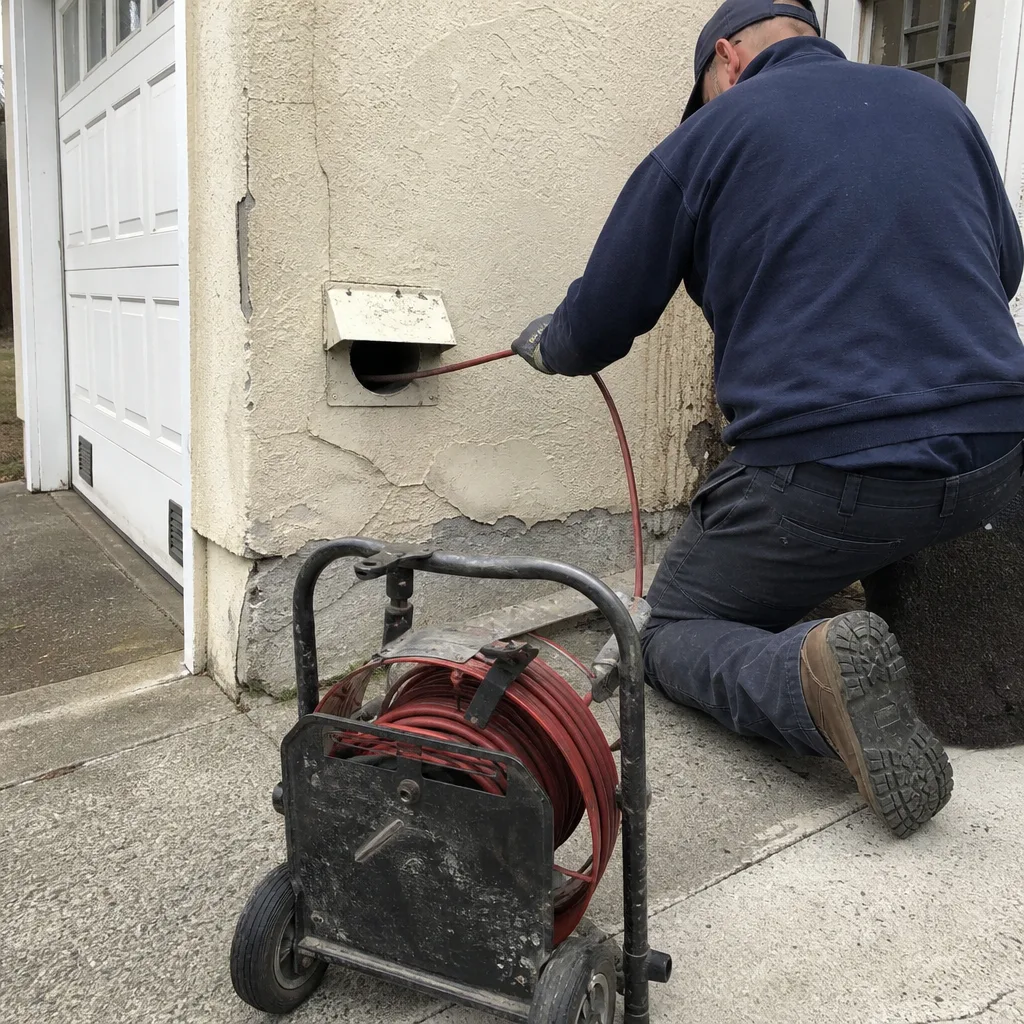 Before
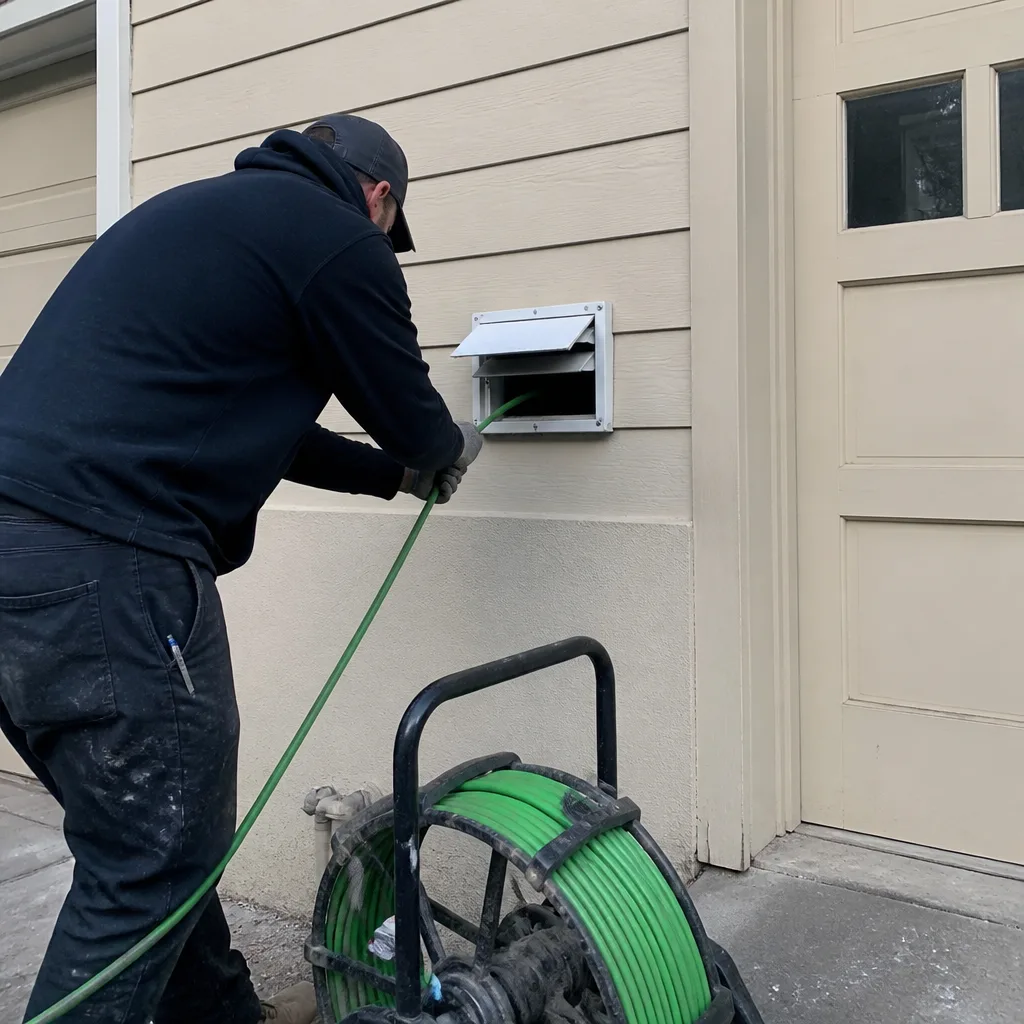 After
After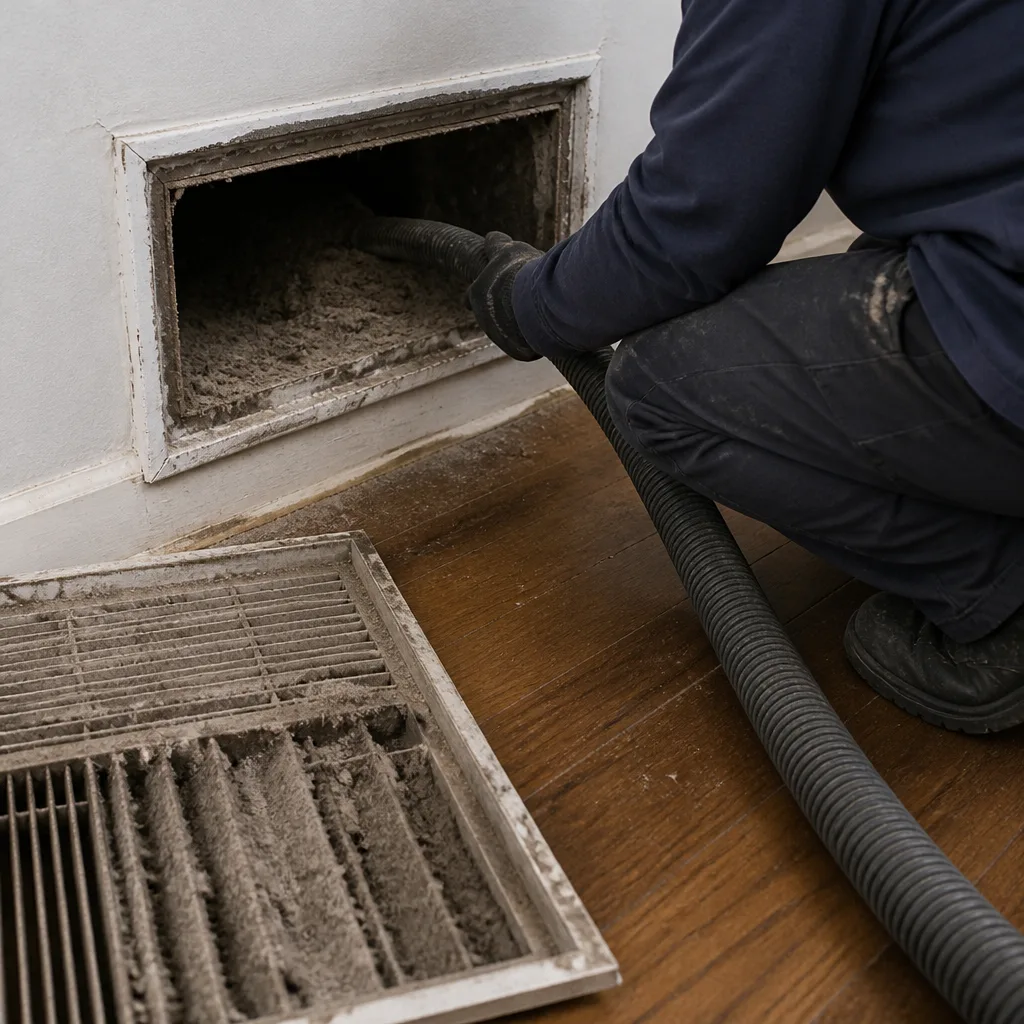 Before
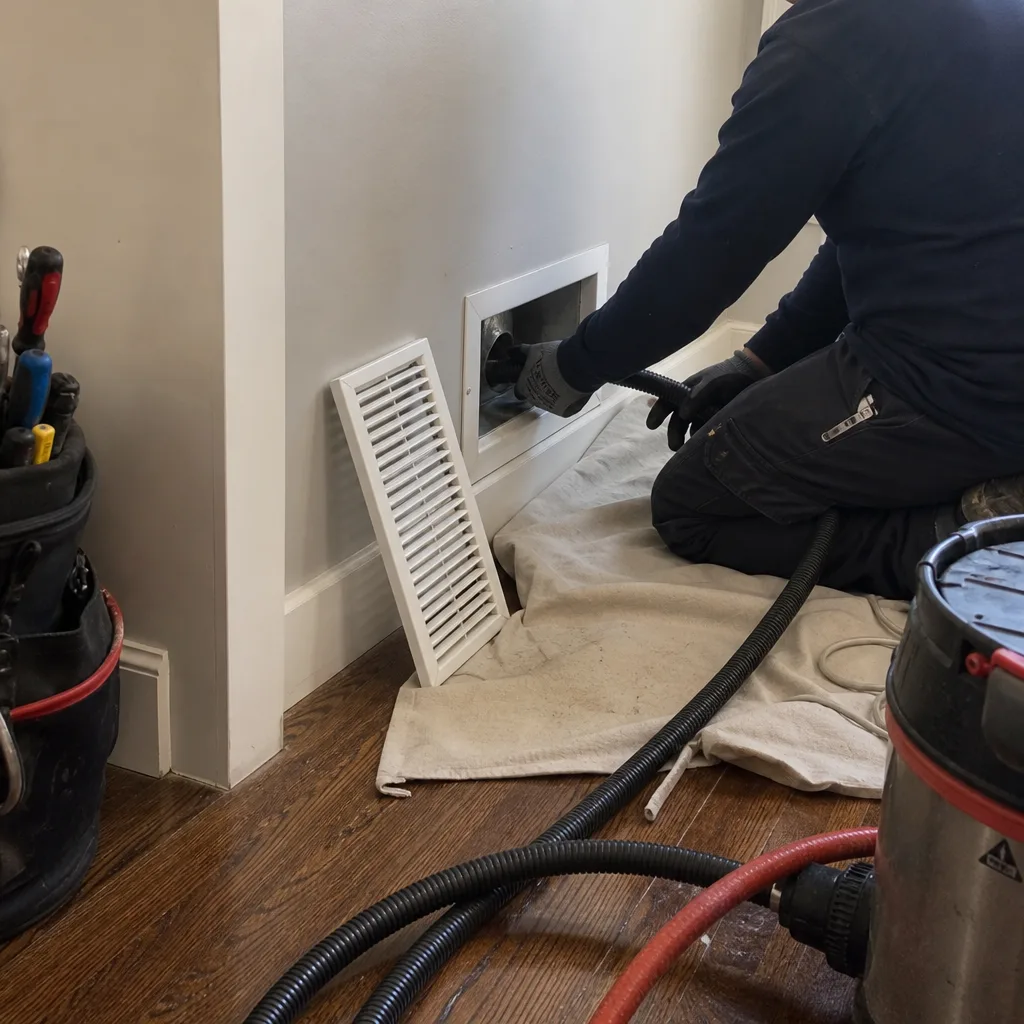 After
After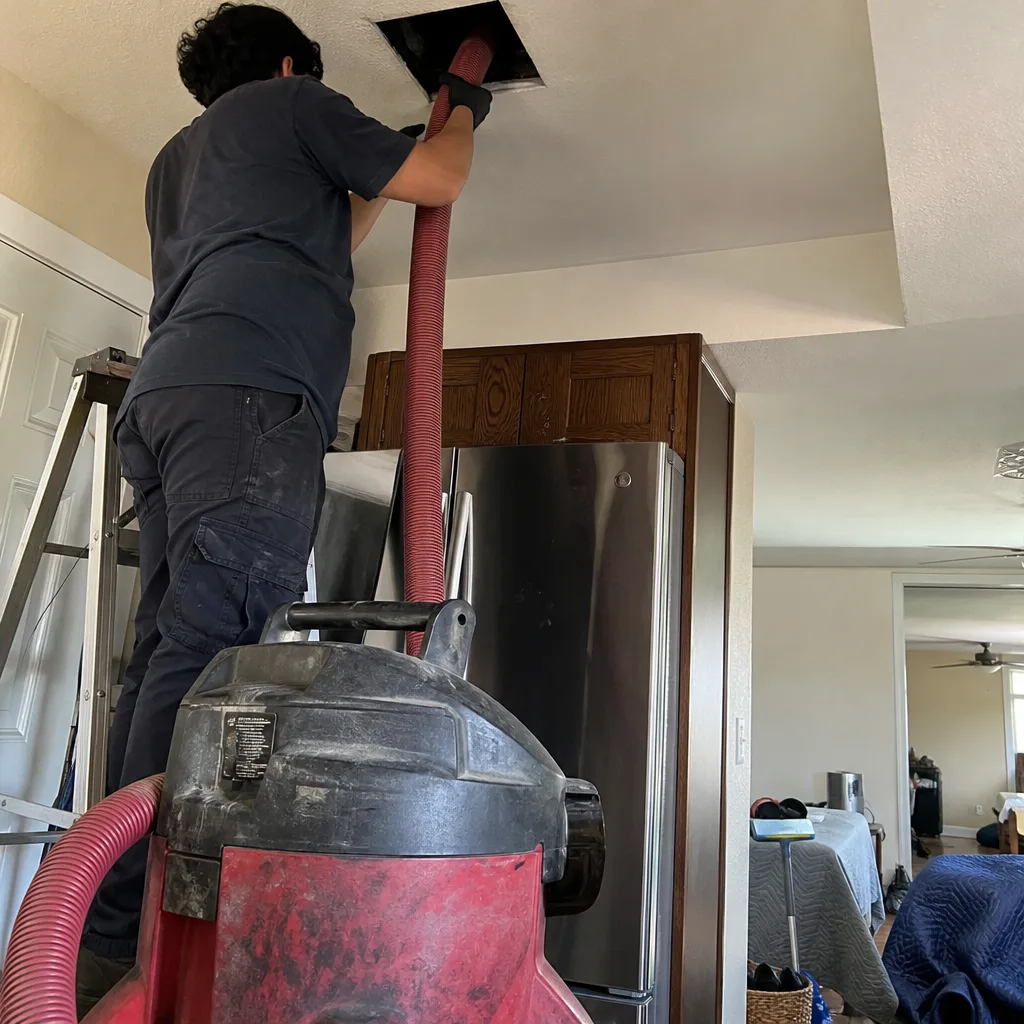 Before
 After
AfterReplacement Cost & What’s Included
Here’s what you should expect to pay for Honeywell vent sanitizing replacement in San Francisco, parts and labor included:
- UV lamp replacement (UV2400 or UV5000): $185 to $265 installed
- UV lamp plus ballast replacement: $320 to $420 installed
- Socket replacement due to corrosion: $145 to $220 installed
Every quote we give in San Francisco includes the part, the labor, and the testing of the unit after installation, and we put that price in writing before we touch a single vent cover. What drives the range is mostly access: some units in Edwardian flats in the Inner Richmond are tucked behind a duct run that takes an extra half hour to reach safely. The ballast cost also varies by unit age; older UV5000s used a magnetic ballast that Honeywell has since replaced with a quieter electronic one.
We include a written guarantee on every vent sanitizing repair, good for 365 days. If the part fails during that window, we come back and fix it at no charge. No fine print, no inspection fee to get us back out.
DIY or Call Us?
You can diagnose what’s wrong with reasonable confidence: check the indicator light, look through the view port, and note the model number. But replacing a Honeywell UV lamp or ballast means working inside a metal duct with line voltage present, and the lamp itself contains mercury and will shatter into fine glass and powder if you flex it wrong. That’s a skin, eye, and electrical hazard in one step. In more than a few San Francisco homes, the unit is installed high on a trunk line that requires a ladder and two hands.
We recommend you let a trained technician handle the actual swap. The same goes for the socket corrosion we see so often in the fog belt; the fix is straightforward if you know how to de-energize the circuit and work the wiring harness without cracking the housing. If you’re unsure whether the part is even bad, call us at (951) 527-6259 and describe what you’re seeing. We’ll give you an honest read over the phone, and if it turns out the unit just needs a bulb that’s still under warranty, we’ll tell you that too.
FAQs
Plan on 12 to 16 months of useful life. The manufacturer rates the lamp for a year, but San Francisco’s damp coastal air and long fog season mean most lamps lose enough UV-C output by month 14 or 15 that we consider them done. If your lamp has been in for two years or more, it’s not sanitizing anything regardless of whether it still glows.
Yes, in most cases. The lamp, ballast, and socket are all separate serviceable parts, and we stock all three for Honeywell vent sanitizing units. The only time we recommend replacing the whole unit is when the housing itself has rusted through, which happens in older SF homes where the duct has sweated for years, or when the unit predates 2010 and Honeywell no longer supports the ballast design. Call us at (951) 527-6259 and we’ll tell you which situation you’re in.
Most Honeywell vent sanitizing replacements take 45 to 90 minutes from the time the technician is at the unit to the time we’ve tested the lamp, confirmed the indicator light, and buttoned the duct back up. If the ballast is also being replaced, add 30 minutes. We test the unit and show you the glowing lamp before we leave.
We stock UV2400 and UV5000 lamps, sockets, replacement view port gaskets, and ballasts for the residential units we see most in San Francisco. We also carry compatible parts for Lennox, Trane, and Carrier systems that have integrated Honeywell sanitizers, so there’s no ordering delays in most cases.
Written by Marcus Veale, Owner, Linden Air Duct San Francisco, serving San Francisco and nearby areas.